
Synthetic grass systems

Artificial Turf

From a 10 mm sand-dressed cricket strip to a 60 mm floodlit football ground. Specified for the sport, the sun and the hours it has to survive each week.

The short version

Pile height picks the sport. Everything under it picks how long you keep playing

Almost every turf enquiry starts with a pile height. It is the wrong first question. A 50 mm roll over a base that holds water is flat and puddled inside two monsoons. The same roll over a graded, drained, compacted base is still playing in year eight.

So we quote turf as a system, and we tell you which part of it you are actually paying for.

  • Level survey and drainage assessment before any specification
  • Rolls set out to minimise seams across the playing area
  • Seams glued and taped, not stapled
  • Infill spread in passes and brushed in, never dumped
  • Lines cut in and inlaid, never painted on
  • Handover with a brushing and top-up schedule

Pick by application

What goes where

A quick reference before the detail. If your ground is unusual, it is worth a call rather than a guess.

ApplicationTurfInfillBase
Football, full size50 – 60 mm infillSand + rubberShockpad over aggregate
Five-a-side / box turf50 mm infillSand + rubberCompacted aggregate
Rooftop / terrace30 mm non-infillNoneShockpad over slab
Cricket pitch & nets10 – 15 mmSand dressedConcrete / bitumen
Hockey12 mm water basedNonePermeable + shockpad
Landscape & podium25 – 40 mmOptional sandLevelled screed

The range

Seven turf builds

Specifications below are the builds we quote most often. Fibre, dtex and colourway can be varied to a consultant's specification.

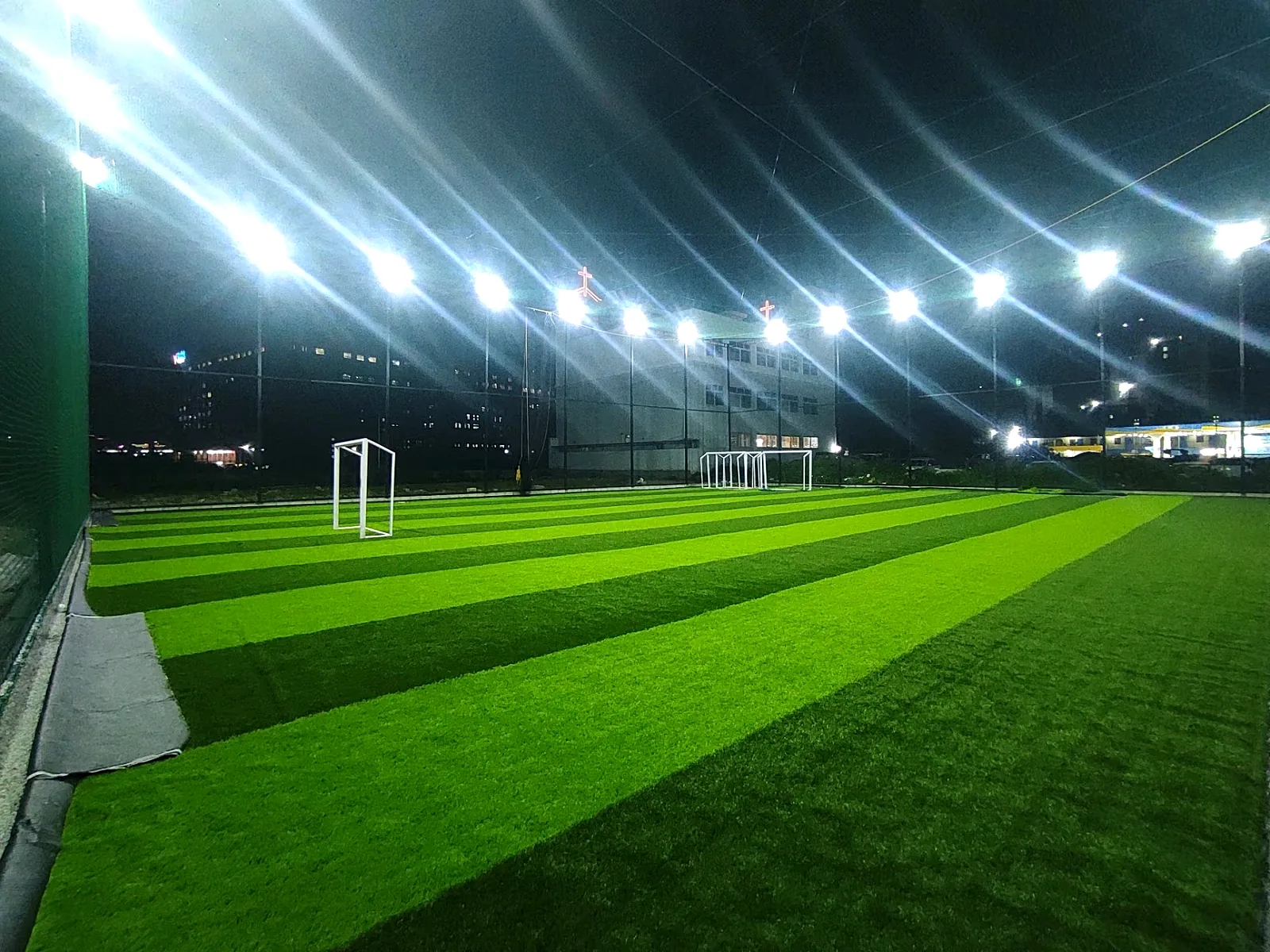
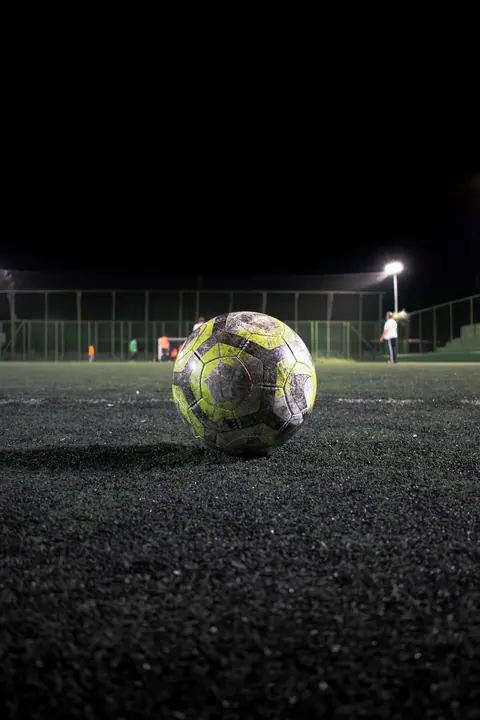
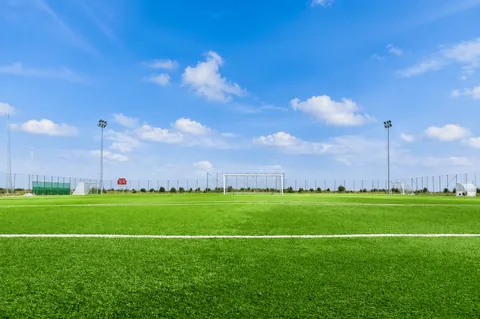
Floodlit synthetic football turf at dusk

50 mm Infill Football Turf

Football, futsal, box cricket, multi-sport

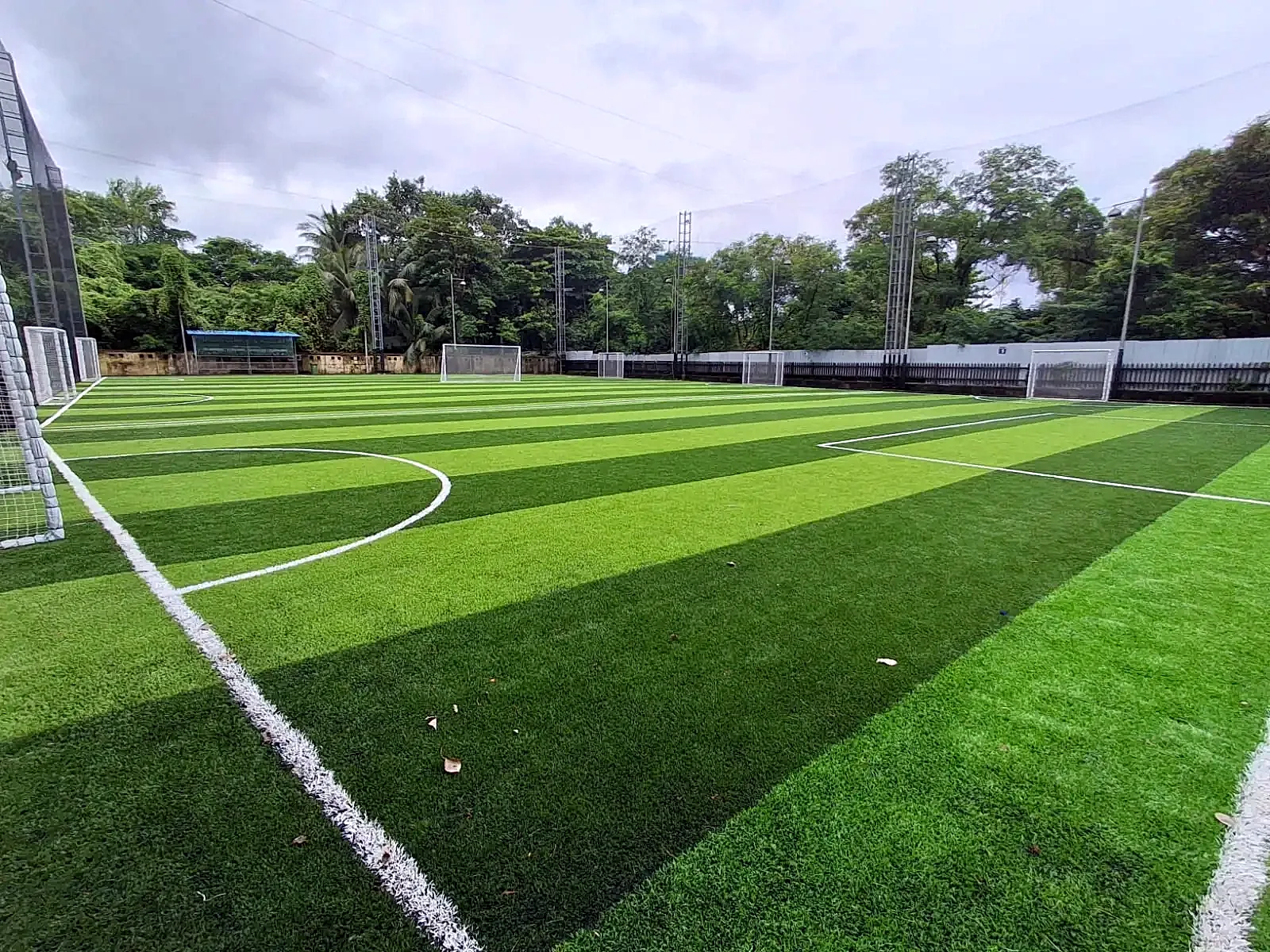
The workhorse pitch surface for club, academy and commercial five-a-side. Monofilament fibre, sand and rubber infill, over a shockpad or compacted aggregate.

Pile height
50 mm
Fibre
Monofilament or bi-colour, UV stabilised
Dtex
8,500 to 12,000
Gauge
5/8 inch
Stitch rate
140 to 165 per m
Infill
Silica sand plus SBR or EPDM granules
Backing
PP with SBR latex, or PU

PU backing gives higher tuft-lock where the pitch gets washed down or takes heavy rain.
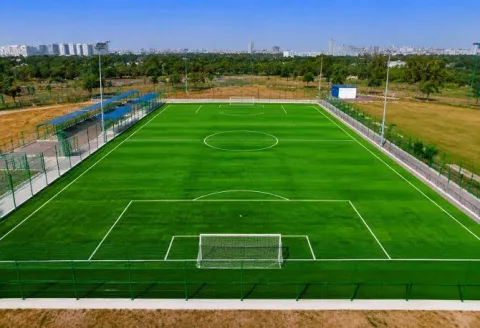
60 mm professional football turf

60 mm Professional Football Turf

Full-size grounds, stadia, academies

Deeper pile and higher fibre weight for full-size grounds carrying heavy match and training load, or where a softer ball roll is wanted.

Pile height
60 mm
Dtex
12,000
Gauge
5/8 inch
Stitch rate
165 per m
Infill
Silica sand plus rubber granules
Base
Shockpad over engineered aggregate
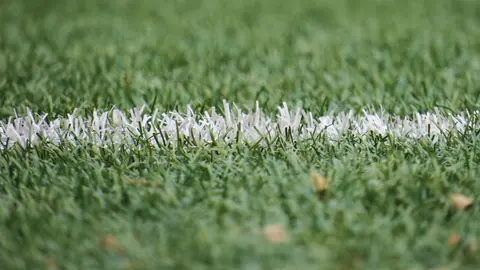
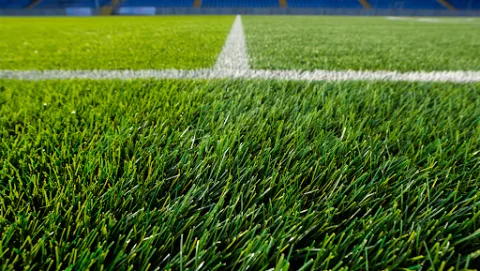
Close-up of artificial grass fibres and a white line marking

30 mm Non-Infill Multi-Sport Turf

Rooftop turfs, indoor five-a-side, school grounds

High-density curled fibre over a prefabricated shockpad. No sand, no rubber. Quick to install, quick to clean, and the obvious choice for rooftops and indoor arenas.

Pile height
30 mm
Dtex
18,000
Gauge
3/8 inch
Stitch rate
180 per m
Infill
None, shockpad only
Density
Medium or high, dark green or bi-colour

Lowest dead load of any football system. Usually the only one a terrace slab will take.

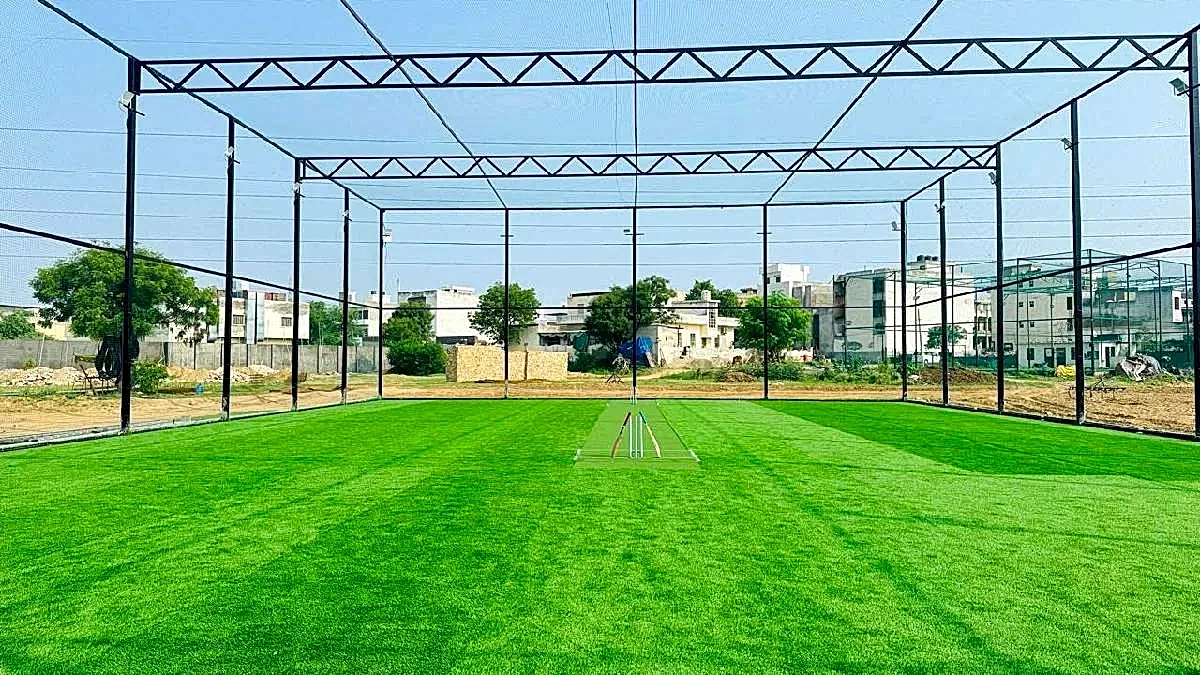
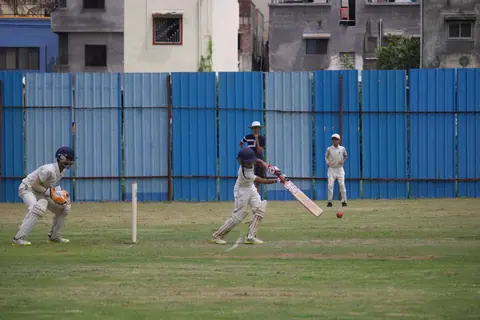
Cricket net with artificial turf pitch

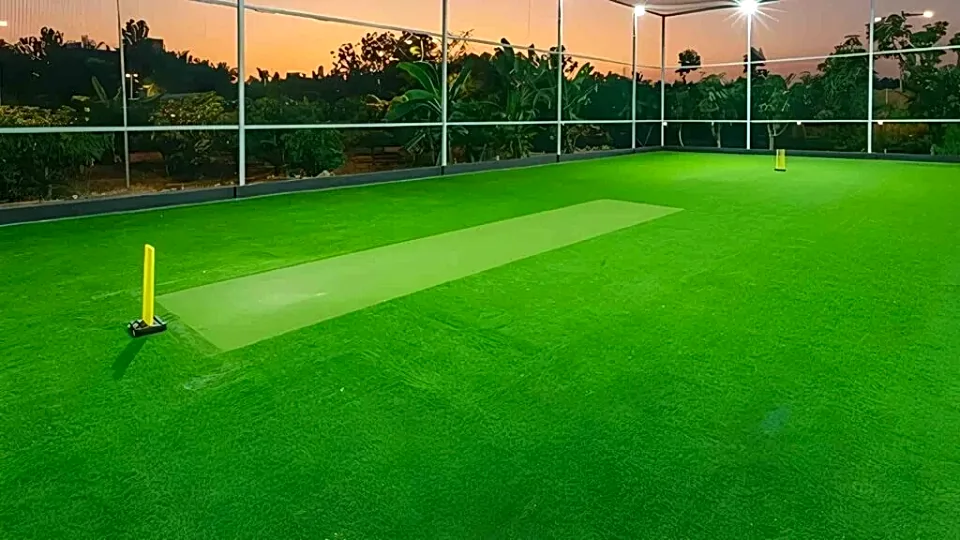
10 to 15 mm Cricket Turf

Cricket pitches, practice nets, box cricket

Tight, low-pile turf for match pitches and practice nets. Sand-dressed for pace, on a concrete or bitumen bed so the pitch behaves the same in year five.

Pile height
10 to 15 mm
Dtex
6,000 to 8,500
Gauge
3/16 inch
Stitch rate
270 to 340 per m
Infill
Silica sand dust, dressed
Base
Concrete or bituminous, laser-levelled
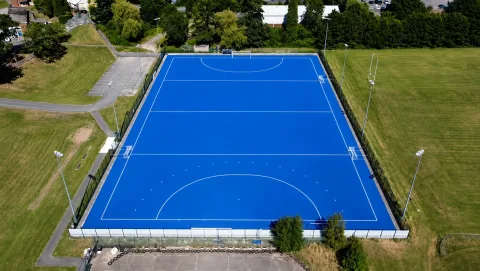
12 mm water-based hockey turf

12 mm Water-Based Hockey Turf

Hockey, season-ball cricket

Dense texturised pile with no infill, irrigated before play for a fast, true ball roll. Specified with the drainage and irrigation package it needs.

Pile height
12 mm
Dtex
7,300
Gauge
5/32 inch
Stitch rate
275 per m
Infill
None, water based
Base
Permeable, with shockpad
Exhibition turf surface close-up

13 mm Multi-Purpose Turf

Football, box cricket, basketball

Bi-colour curly texture that takes footfall well. The default for football, box cricket, basketball.

Pile height
13 to 15 mm
Dtex
6,000 to 8,500
Gauge
3/16 inch
Stitch rate
270 to 300 per m
Colours
Bi-colour green, red
Landscape turf surface

25 to 40 mm Landscape Turf

Terraces, podiums, clubhouses, landscaping

Straight pile with green or yellow curls for podiums, balconies, clubhouse lawns and society landscaping. Same UV package as the sports grades.

Pile height
25 / 30 / 35 / 40 mm
Fibre
Straight pile with curled thatch
Colours
Green curls or yellow curls
Backing
Perforated, free draining
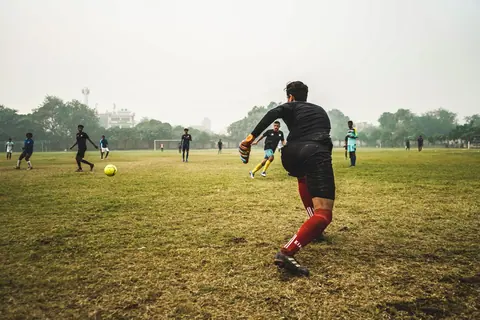
Football on a community ground in India at first light

Aftercare

Turf does not maintain itself

A brush, a rake and somebody actually turning up will add five years to a pitch.

Weekly
Litter removal and brushing against the pile direction
Quarterly
Decompaction and infill redistribution
Annually
Infill top-up, seam and line inspection, deep clean
As needed
Repairs, re-seaming, targeted replacement of goalmouths
Ask about an AMC

FAQ

Artificial turf, answered

A well-installed 50 mm infill football turf gives roughly 7 to 10 years of heavy commercial play before the fibre lies down and needs replacing. Landscape and low-traffic turf runs longer. Life depends far more on brushing, decompaction and infill top-up than on the grass itself.

Infill turf uses silica sand and rubber granules to hold the fibre upright and provide shock absorption, which suits 40 to 60 mm pile football pitches. Non-infill turf uses a high-density curled fibre over a prefabricated shockpad instead. It is lighter, faster to install and much cleaner, so rooftops and indoor arenas usually get it.

Yes, and 30 mm non-infill turf over a shockpad is normally the right system because it adds the least dead load. The slab needs a working fall to drains, waterproofing in good condition, and a perimeter detail that lets water off. We check all three before quoting.

Brush the pile against the lay every one to two weeks in commercial use, decompact and redistribute infill quarterly, top up infill annually, and keep leaves and litter off it. Inspect seams and line markings each year. An annual maintenance contract pays for itself in extended surface life.

Yes. Cricket uses a much shorter pile than football: 10 to 15 mm, sand-dressed, over a laser-levelled concrete or bituminous bed. That combination gives consistent pace and bounce for match pitches and practice nets, and is standard for turf cricket nets in schools and academies.

Chat with us