


01
Spray-coat
- Thickness
- 14 mm
- Water
- Permeable
- Best for
- Schools, campuses, jogging loops
- Renewal
- Re-sprayable

Athletics
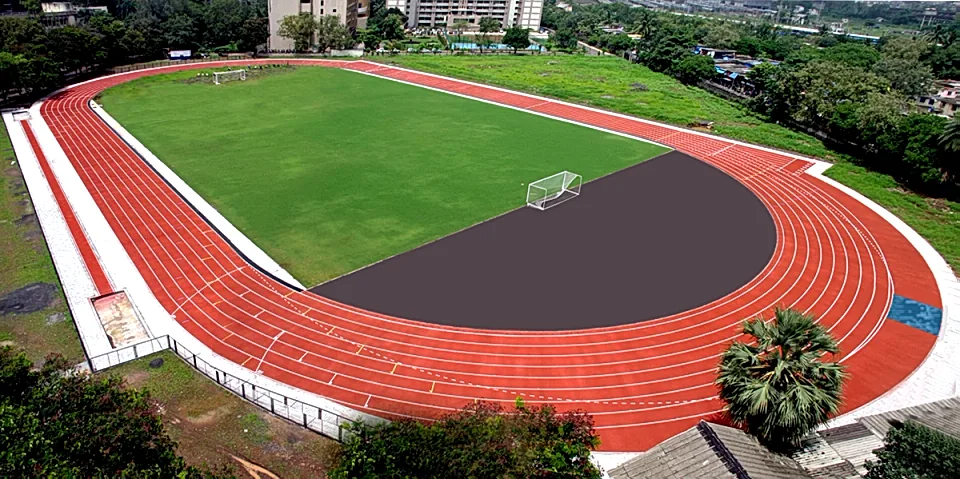
Sandwich, spray-coat and full-PUR running tracks. School sprint straight through to a full 400m eight-lane oval, geometry set out to World Athletics dimensions.
Why tracks fail
The drainage is the whole job
A synthetic track is a waterproof membrane stretched over an oval. Water it sheds has to go somewhere. With nowhere to go it sits at the kerb line, works under the edge and lifts the surface from below. Tracks come apart at four years old for exactly this.
So on every track we quote, drainage is a line item with a design behind it: falls, slot drains, outfalls and the infield, sized against local rainfall data rather than copied from the last tender.
Choosing a system
The right answer depends on the level of competition you are building for and how the site drains.
01
02
03

Specifications
Competition tracks, school and campus athletics
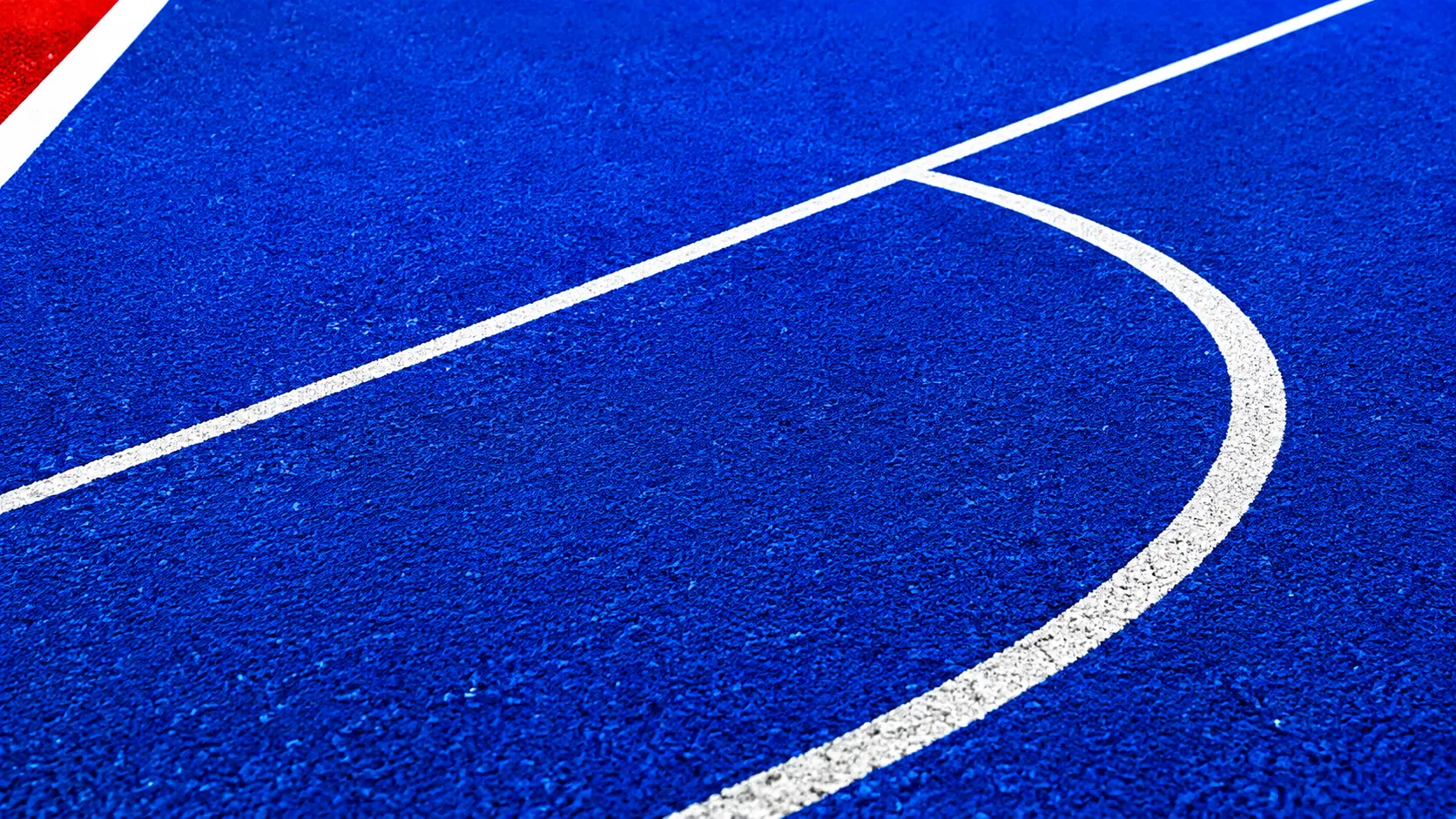
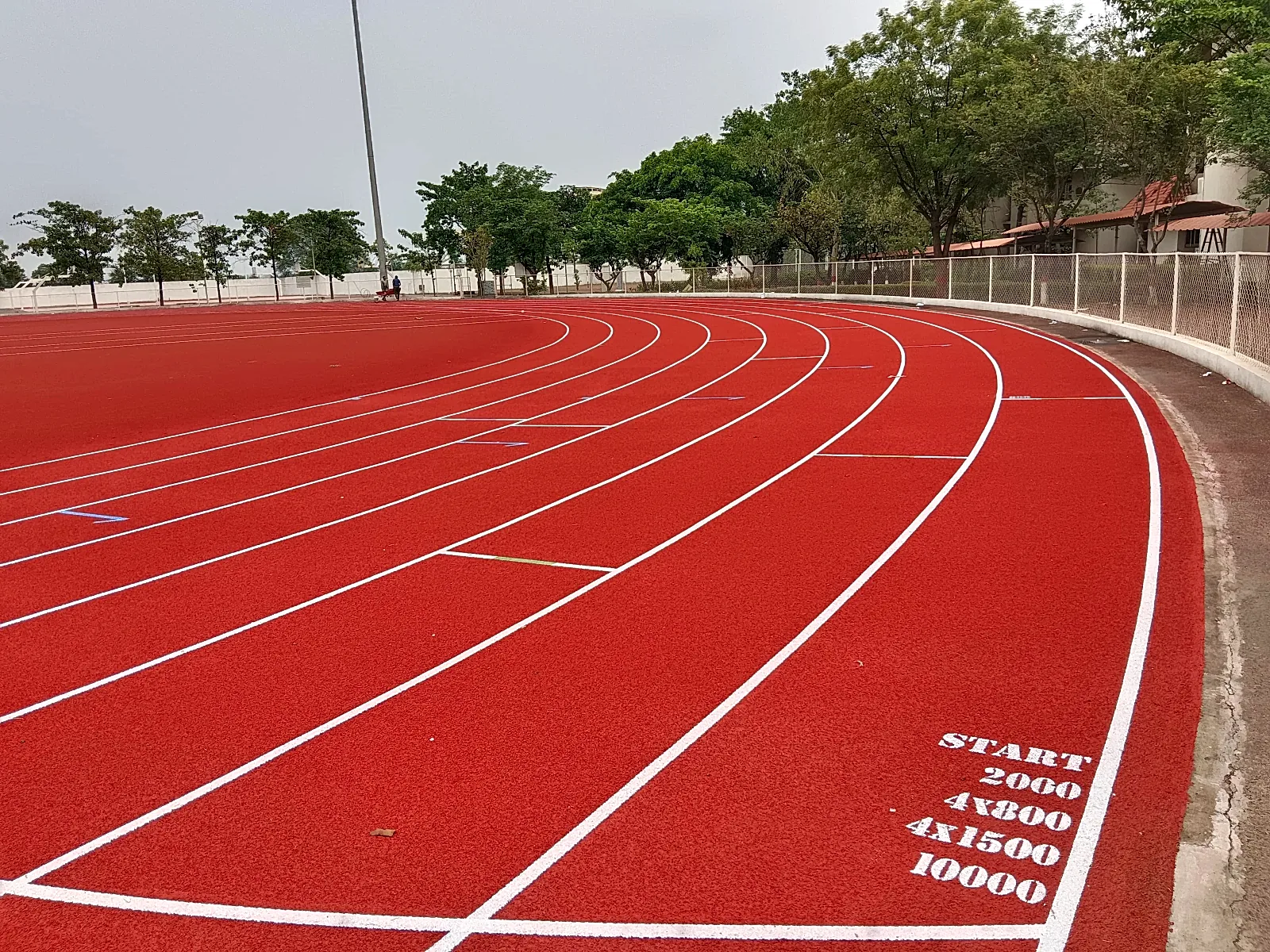
An in-situ rubber base broadcast with coloured EPDM and sealed with PU. Impermeable, spike resistant, and the most common competition build in Indian conditions.
Multi-purpose tracks, jogging loops, defence grounds
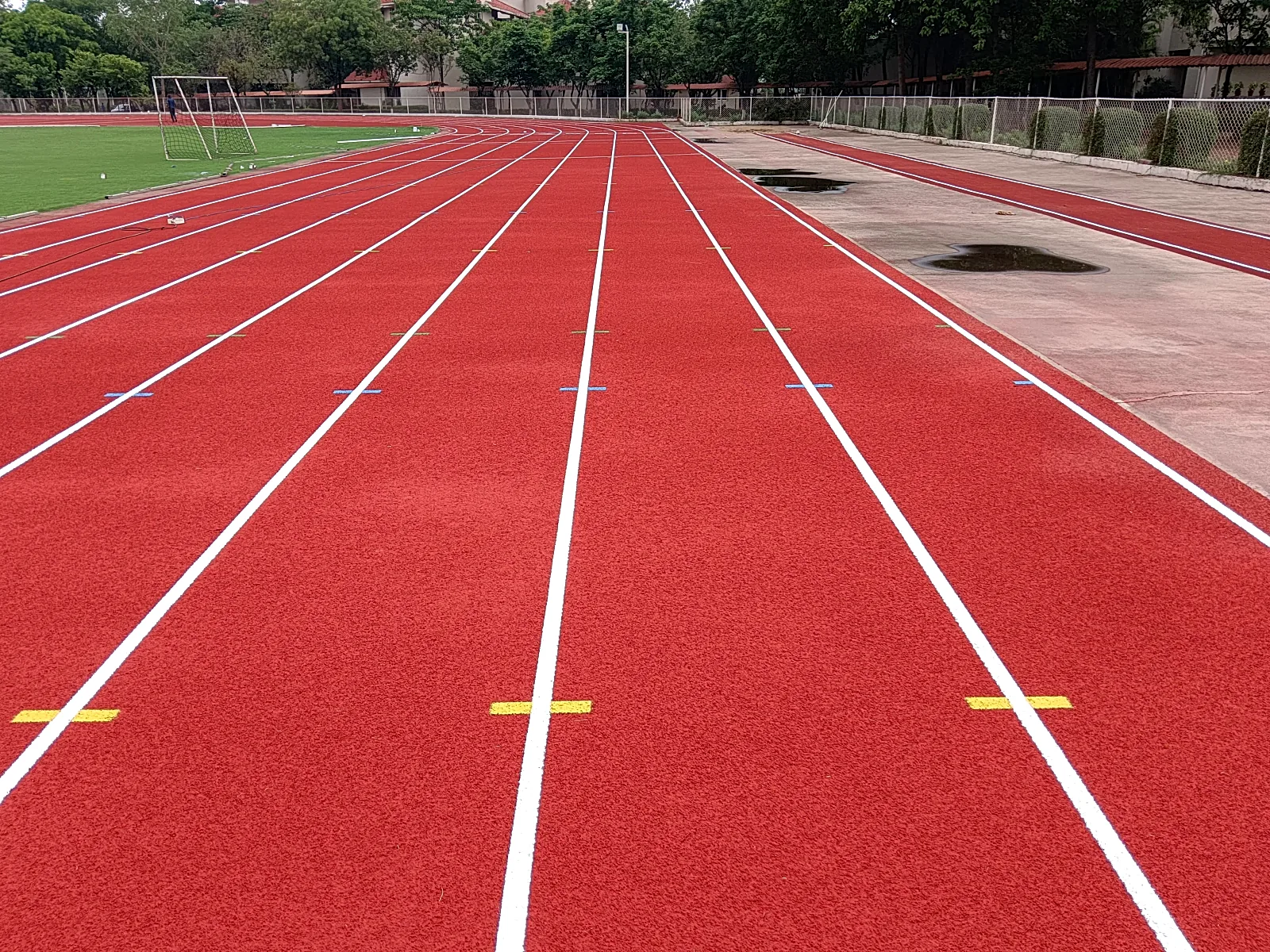
A 12 mm SBR base with a 2 mm PU and EPDM structural spray on top. Water permeable, quick to resurface, the practical choice where drainage is tight.
National and international competition venues
A multi-layer, cast-in-place full polyurethane track. Hard-wearing top coat and very high UV resistance. The spec for meets that are being timed seriously.
On site
Eight to twelve weeks for a full 400m facility, weather permitting.
Track geometry pegged from the centre, lane widths and staggers computed to World Athletics dimensions before any material lands.
Bituminous or concrete base laid to a tolerance of 3 mm under a 3 m straight edge. Anything looser shows up as a puddle later.
Perimeter and infield drainage, slot drains and outfalls sized for local rainfall. The single most common gap in Indian track tenders.
In-situ pour or spray in controlled passes, cured, then structural top coat.
Lane lines, staggers, exchange zones, hurdle and take-off marks set out and applied in track-grade PU paint.
FAQ
A track is priced by system and by area, and the civil work is usually the larger half of the bill. Spray-coat systems are the most economical, sandwich systems sit in the middle, full-PUR is the premium competition build. A realistic budget also carries drainage, kerbing and the infield.
A sandwich system is an in-situ rubber base broadcast with EPDM and sealed with PU, impermeable, 13 mm. A spray-coat system puts a 2 mm PU and EPDM spray over a 12 mm permeable SBR base, and is the easiest to resurface. Full-PUR is a multi-layer cast polyurethane build at 15 mm, and the most durable of the three.
Synthetic running tracks are typically 13 to 15 mm thick over an engineered base. Competition systems certified by World Athletics fall in that range. Recreational and school tracks are sometimes laid thinner. Thickness only means something alongside the base build, which does most of the work.
Ten to fifteen years is fair for a well-drained synthetic track, and spray-coat systems can be re-sprayed once or twice inside that life to reset the surface. Standing water and tree litter shorten it most, so drainage maintenance matters more than usage.
Try
Results show the passage the words appear in. Opening one takes you to that exact spot on the page.