
What it is made of
Materials
Nine categories. Every system on this site is some combination of them, and the difference between a good surface and a bad one usually sits in this list.
Jump to
The nine categories
01 / 10 to 60 mm pile
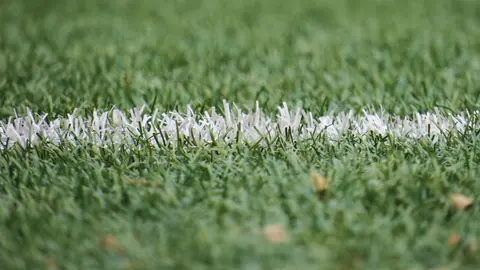
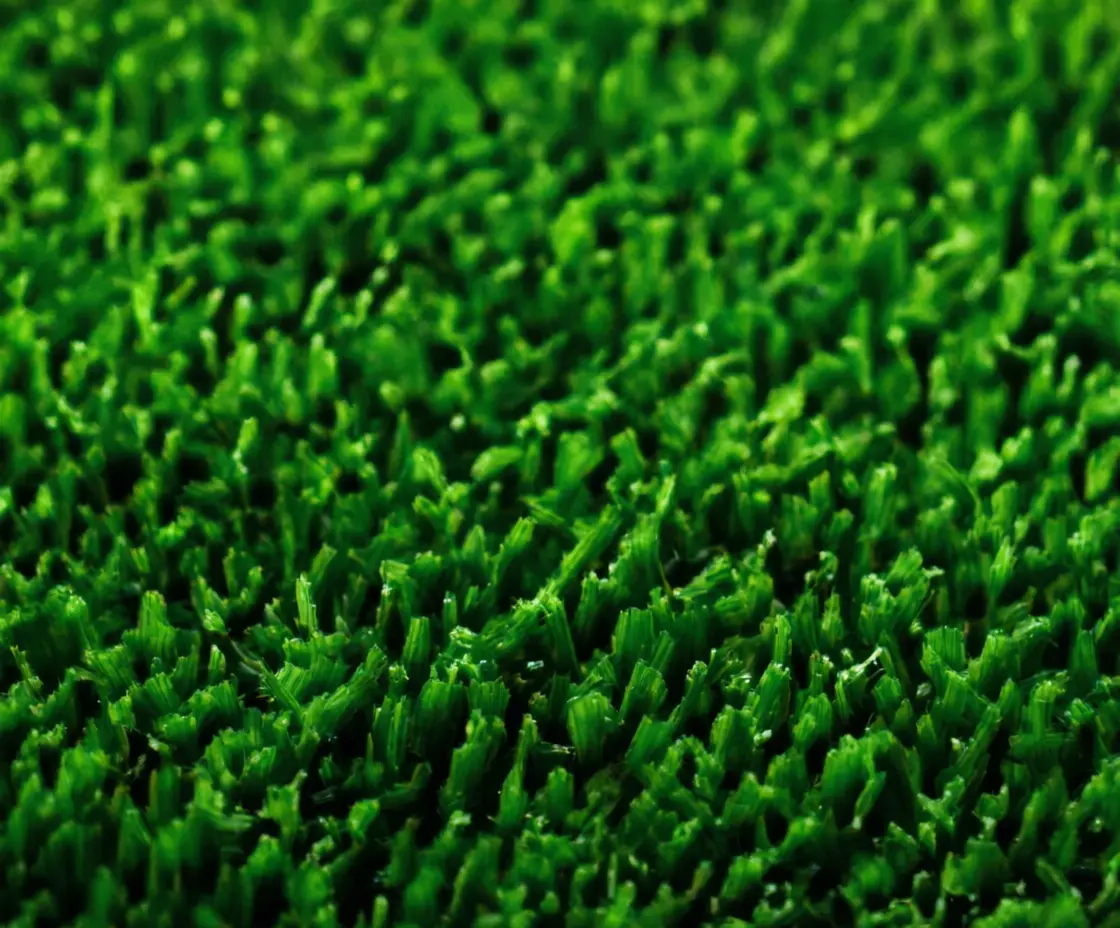
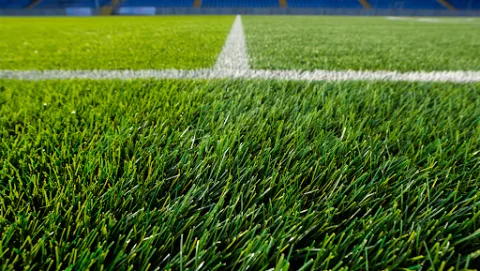
Artificial turf
Polyethylene yarn tufted into a woven backing, then coated so the tufts cannot pull out. Pile height, dtex and stitch rate decide which sport it suits.
Where it goes
- Football and futsal pitches
- Cricket pitches and practice nets
- Hockey
- Rooftop and terrace decks
- Landscape and podium lawns
Numbers
- Pile height
- 10 mm cricket to 60 mm football
- Dtex
- 6,000 to 18,000
- Backing
- PP with SBR latex, or PU for higher tuft-lock
- Infill
- Silica sand and rubber, or none over a shockpad
- UV
- Stabilised for full Indian sun
- Life
- 7 to 10 years under heavy commercial play
What to watch Cheap turf shows up in the dtex, not the pile height. A 50 mm roll at 6,000 dtex lies flat inside two seasons. Ask for the mill spec sheet, not a sample square.


02 / 13 to 15 mm
PU athletic track
Polyurethane binder cast in place over rubber granules, then sealed or sprayed with a coloured EPDM structural layer. Point elastic, spike resistant, jointless.
Where it goes
- 400m competition tracks
- School and campus ovals
- Sprint straights
- Multi-purpose outdoor courts
Numbers
- Sandwich
- 13 mm, impermeable, competition standard
- Spray-coat
- 14 mm, permeable, easiest to resurface
- Full PUR
- 15 mm, impermeable, most durable
- Geometry
- Set out to World Athletics dimensions
- Life
- 10 to 15 years with working drainage
What to watch A track is a waterproof membrane stretched over an oval. If the water it sheds has nowhere to go it gets under the kerb edge and lifts the surface from below.
03 / 5 or 8 layer
Acrylic court coat
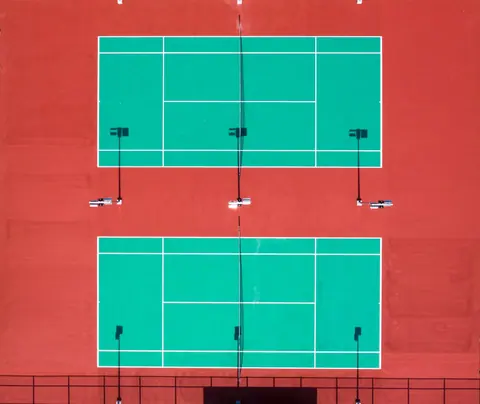
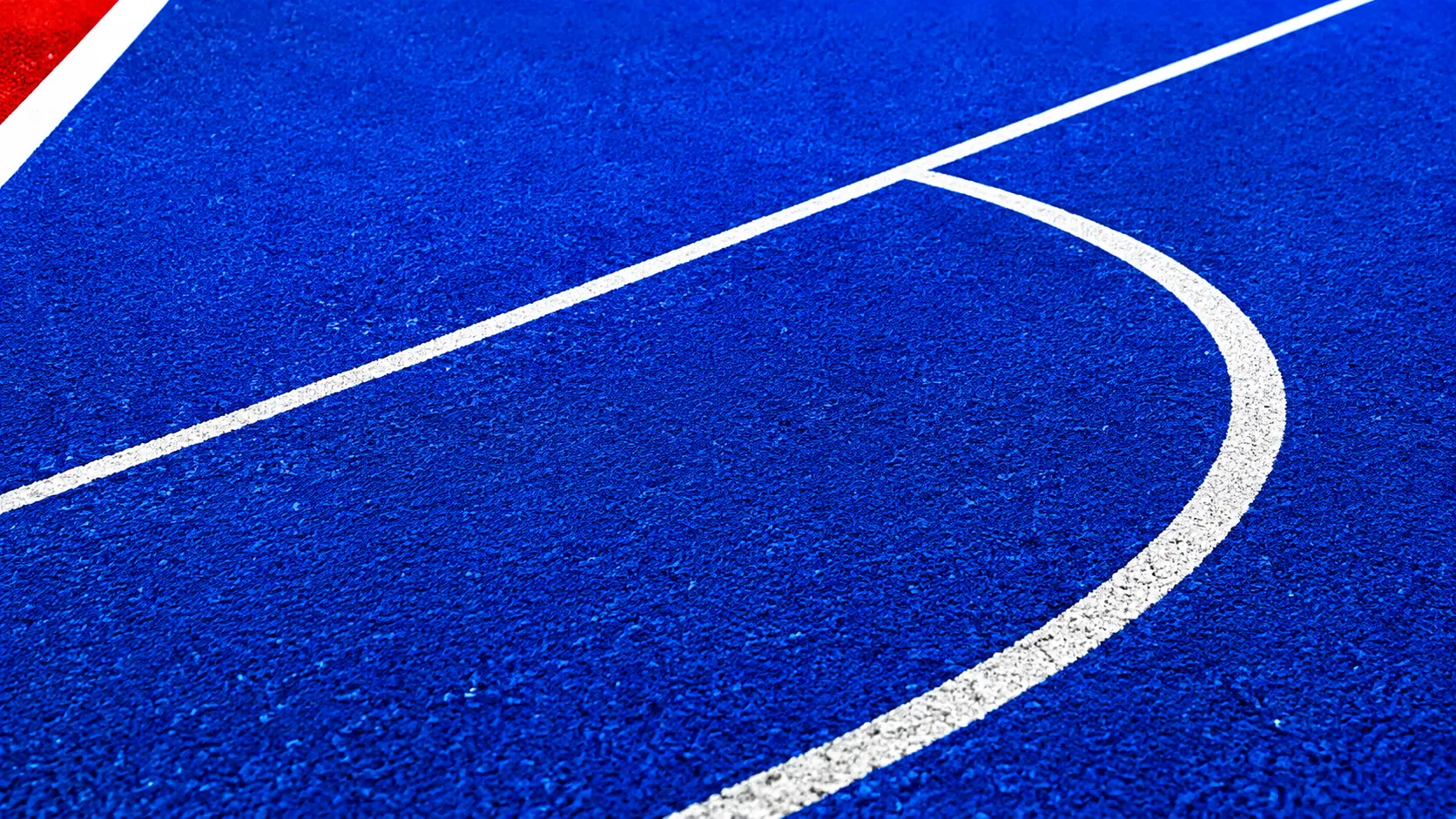
Water-based acrylic resin filled with silica sand, rolled onto a concrete or bituminous base in layers. The cushioned build adds rubberised coats between resurfacer and colour.
Where it goes
- Tennis and pickleball
- Basketball and volleyball
- Badminton
- School and society courts
Numbers
- 5 layer
- Crack filler, primer, 2 x resurfacer, 2 x colour
- 8 layer
- Adds three cushion coats and a seal coat
- Texture
- Coat 1 pigment plus silica, coat 2 pigment only
- Sub-base
- Concrete or bitumen, cured, 1:100 fall
- Recoat
- Every 4 to 6 years, no demolition
What to watch Acrylic is a coating, so it inherits every flaw in the slab under it. A hairline crack left unfilled comes back through the colour within a monsoon.
04 / 1 to 3.5 mm, virgin
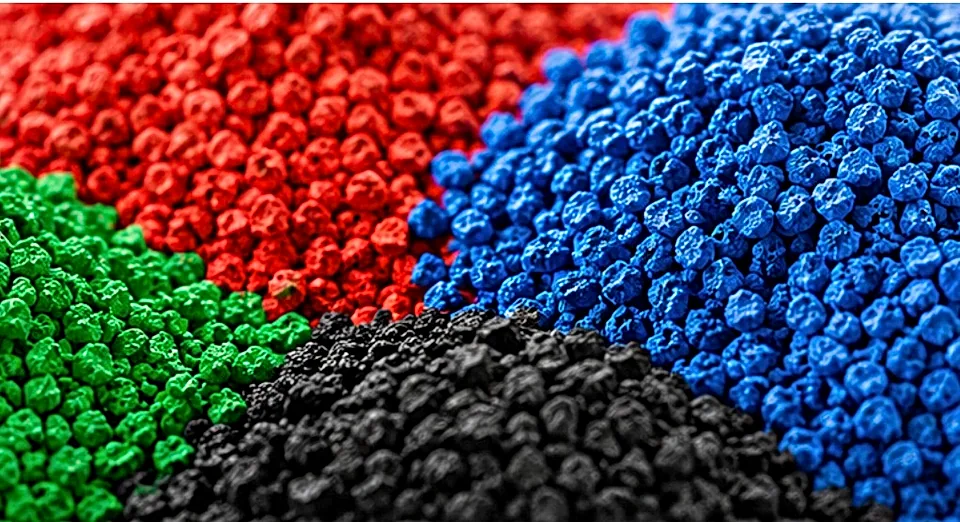
EPDM granule
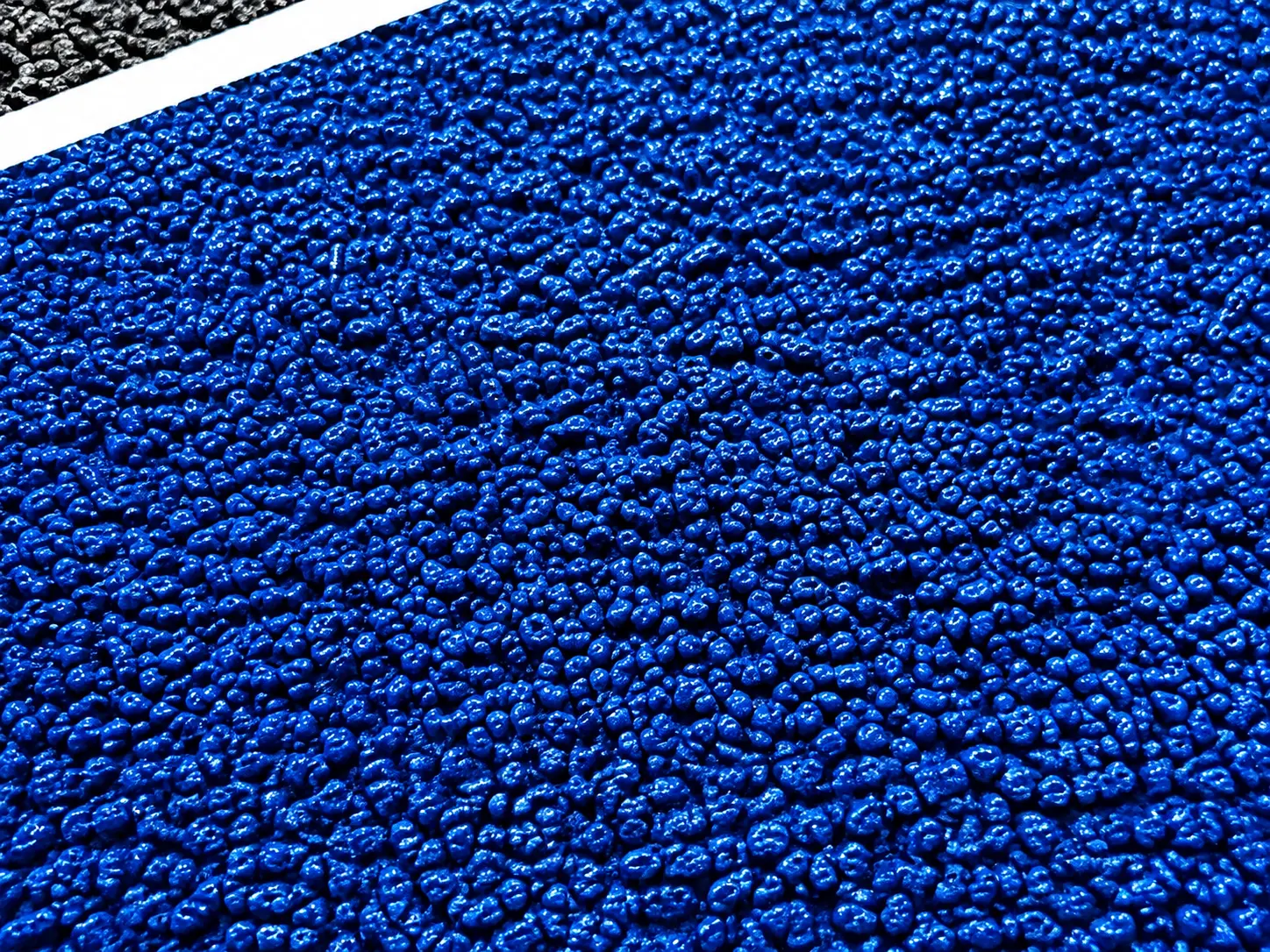
Virgin rubber granules made with additives for colour stability and UV resistance. Bound with PU and trowelled as the wear layer over an SBR cushion.
Where it goes
- Children's play areas
- Jogging tracks
- Water park decks
- Track wear layers
- Coloured inlays and graphics
Numbers
- Wear layer
- 6 mm typical, 10 mm on 50 mm builds
- Colours
- Full range, blended or single
- Colour life
- 8 to 10 years
- Thickness
- Sized to the equipment fall height
- Finish
- Poured in one piece, no joints
What to watch On a play area the number that matters is the critical fall height of the tallest piece of equipment, not the colour. We size the build against the equipment schedule.
05 / Base & cushion
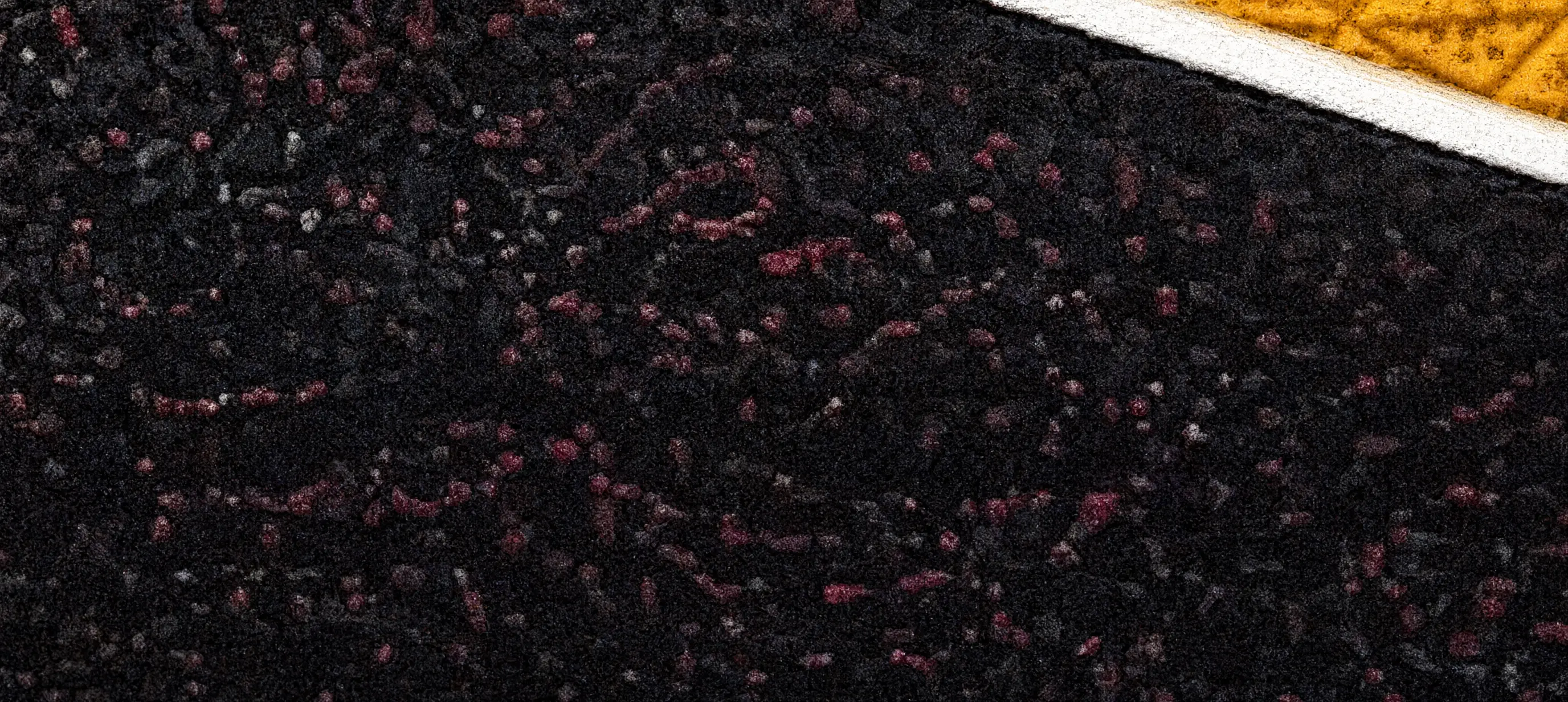
SBR bonded rubber
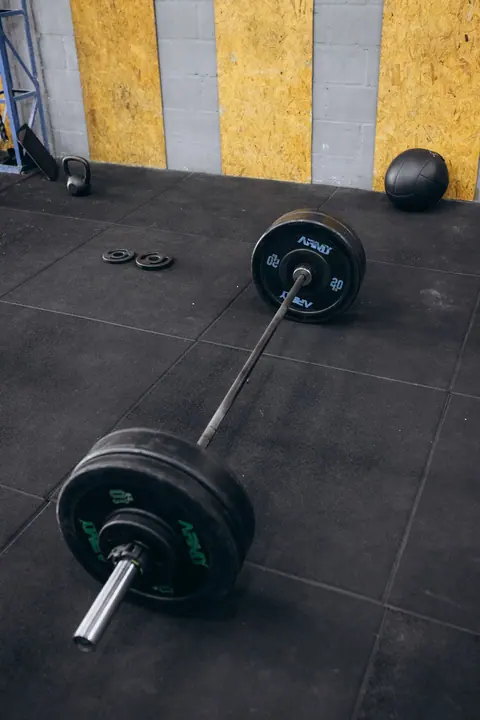
Recycled tyre crumb bound with polyurethane. It does the cushioning work under almost every in-situ system on this site, and makes up gym tiles on its own.
Where it goes
- Play area and track base layers
- Gym tiles and rolls
- Jogging track cushion
- Court sub-layers
Numbers
- Shred grade
- 5 to 10 mm for deep cushions
- Granule grade
- 1 to 4 mm for finer layers
- Colours
- Red, green and black only
- Cost
- Roughly a third of EPDM
- Use
- Almost always under an EPDM wear layer
What to watch SBR cushions exactly as well as EPDM. It just fades sooner and comes in three colours. Where budget is tight, put the money in the base and the EPDM top, not in an all-EPDM build.
06 / 2 mm structural
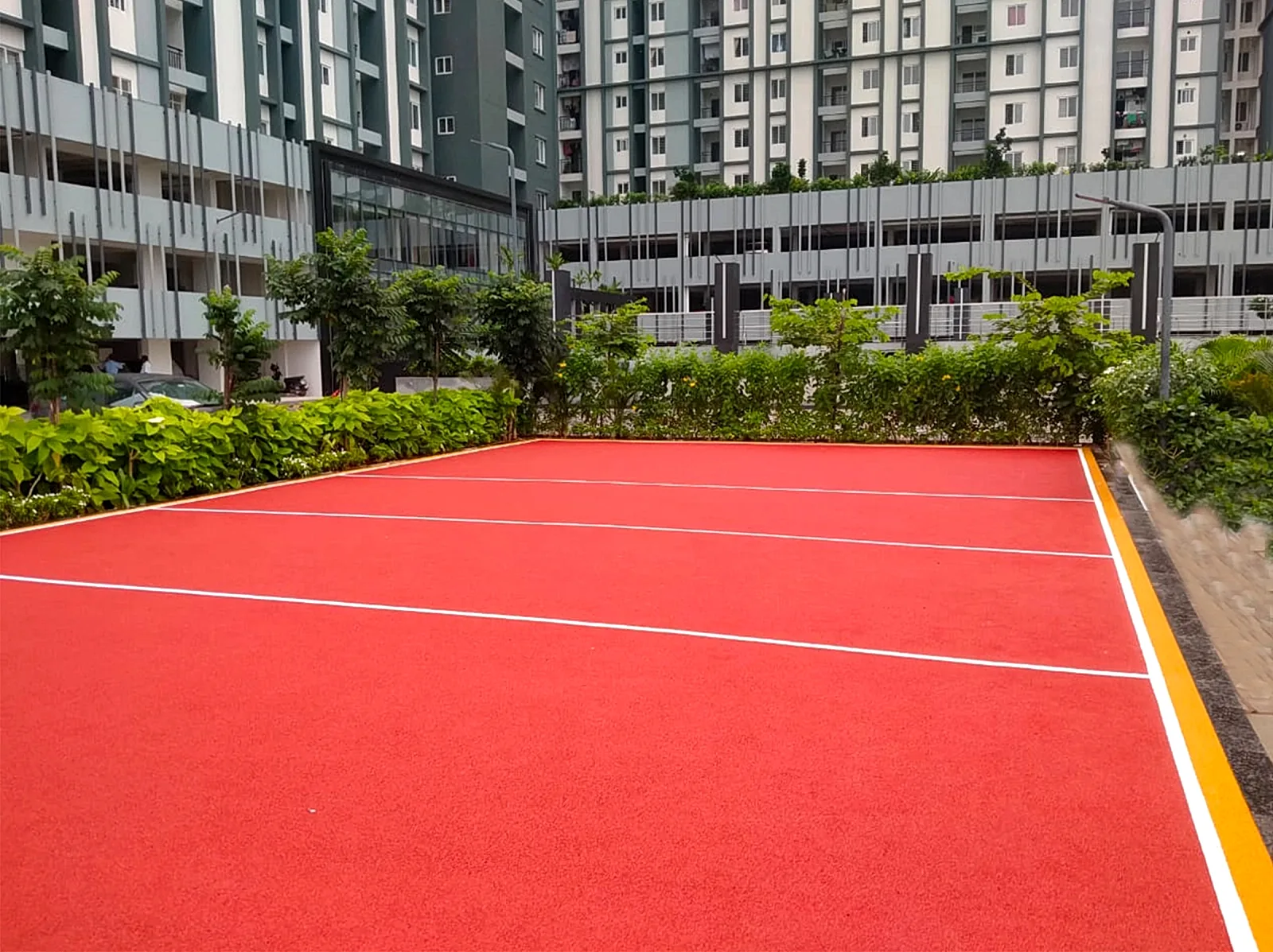
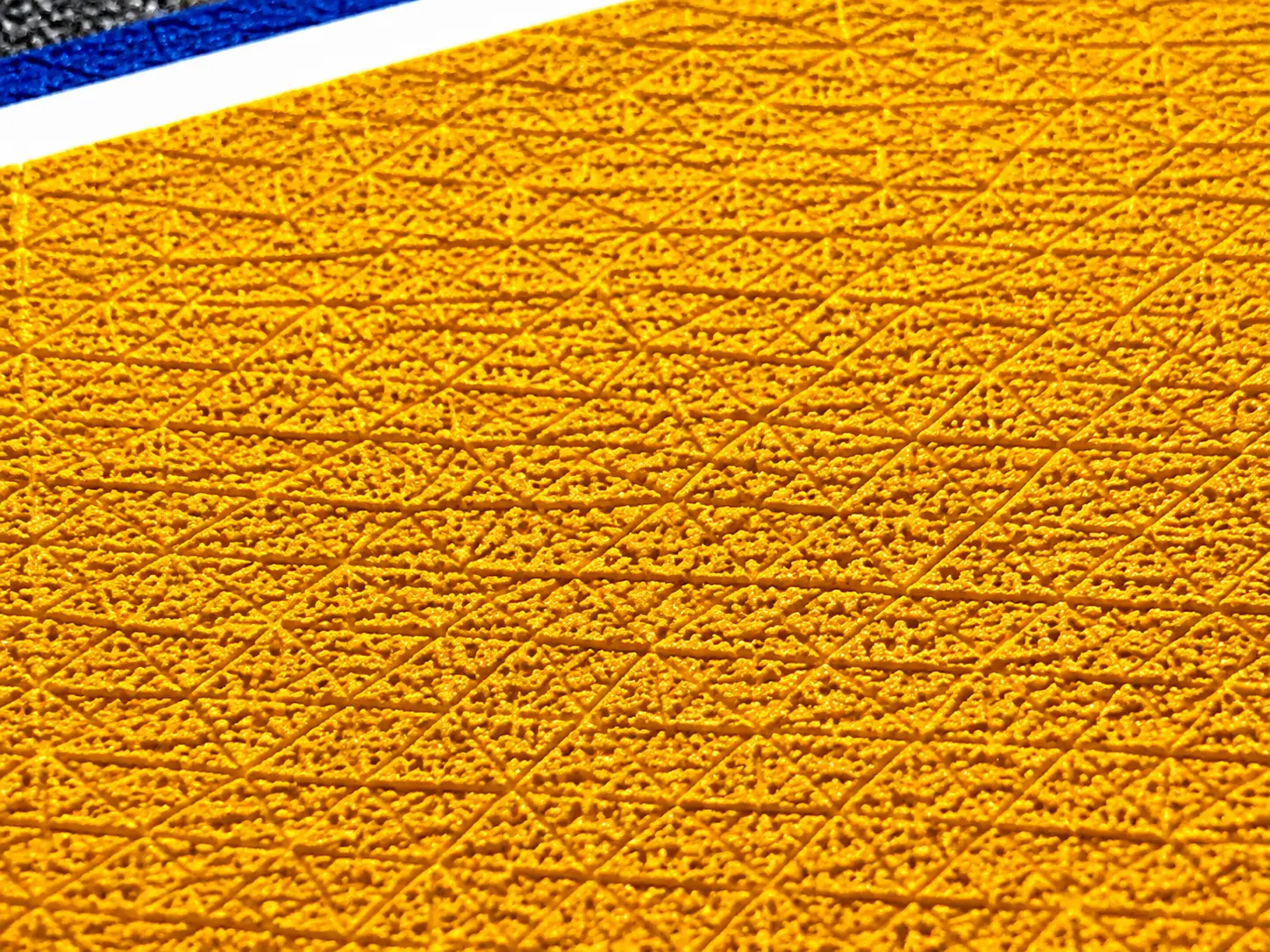
Spray-applied PU
A PU and EPDM mix sprayed in controlled passes over a primed base. It resets a worn surface without stripping what is underneath.
Where it goes
- Track resurfacing
- Tired concrete multi-sport courts
- Box cricket
- Refurbishment where downtime is short
Numbers
- Thickness
- 2 mm over a primed or SBR base
- Texture
- Spike resistant, non-slip
- Downtime
- Days rather than weeks
- Best on
- Sound existing concrete or bitumen
- Repeat
- Re-sprayable once or twice in a track life
What to watch Spray only works over a base that is still sound. Sprayed over a slab that is moving, it cracks in exactly the same places within a year.
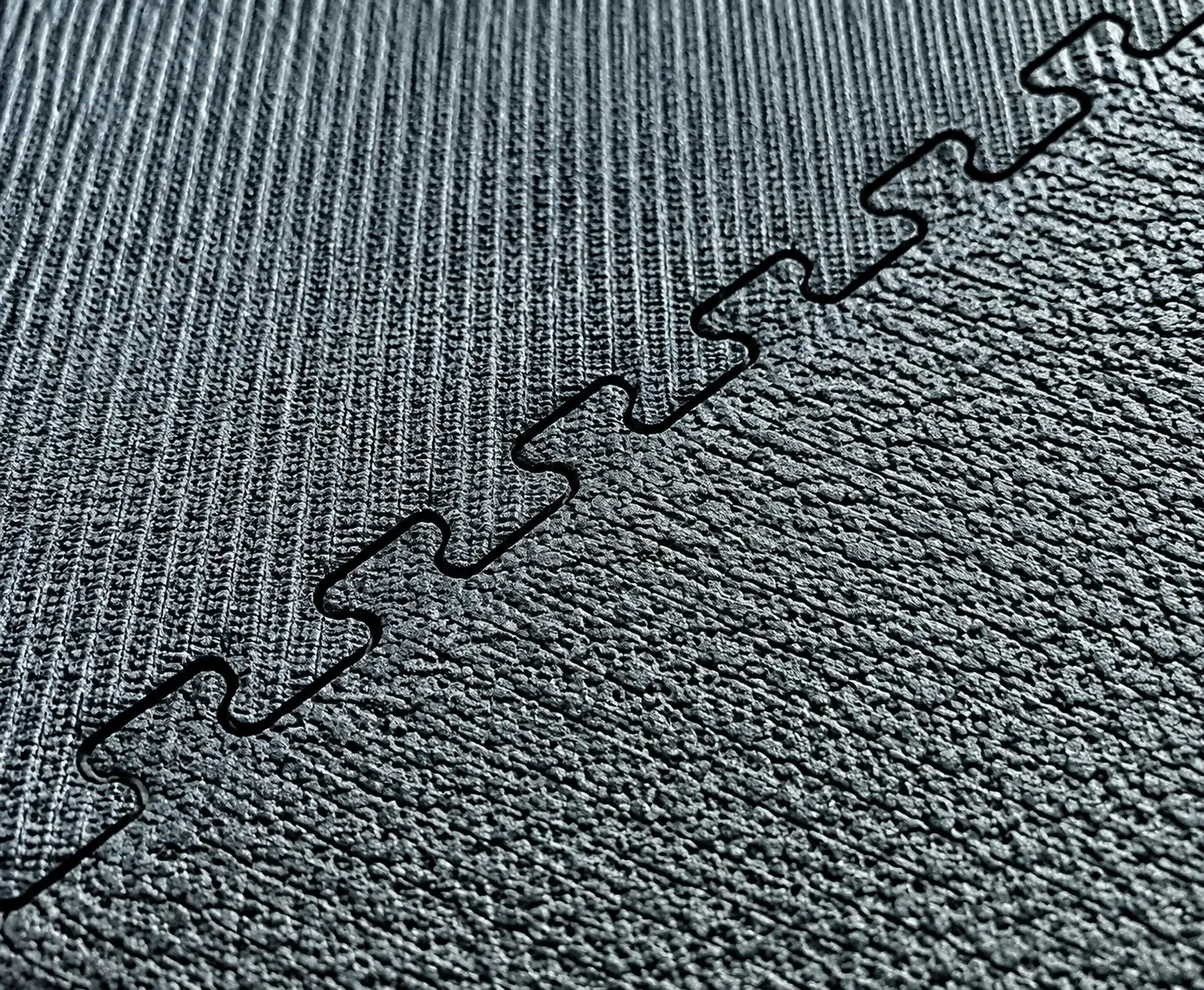
07 / 304.8 mm modular
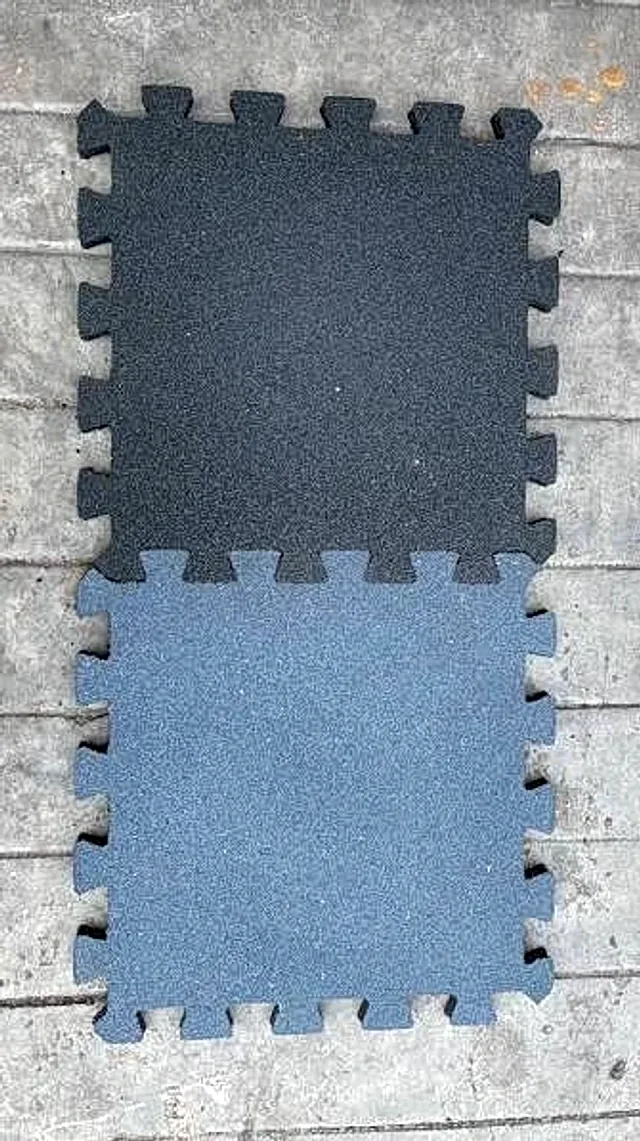
Interlocking tile
Suspended polypropylene tiles that clip together over any level hard base. Dry laid, playable the same day, liftable if the space changes use.
Where it goes
- Multi-sport courts
- Terraces and podiums
- Pop-up and event courts
- Rental and temporary venues
Numbers
- Tile
- 304.8 x 304.8 x 15.8 mm
- Weight
- About 290 g per tile
- Ball rebound
- 93%
- Shock absorption
- 21%
- Rolling load
- 1500 N
- Range
- -40 °C to 70 °C, 100% recyclable
What to watch Tiles need a flat base. Every hump under them becomes a rocking tile, and a rocking tile becomes a trip hazard and then a broken clip.
08 / Prefabricated
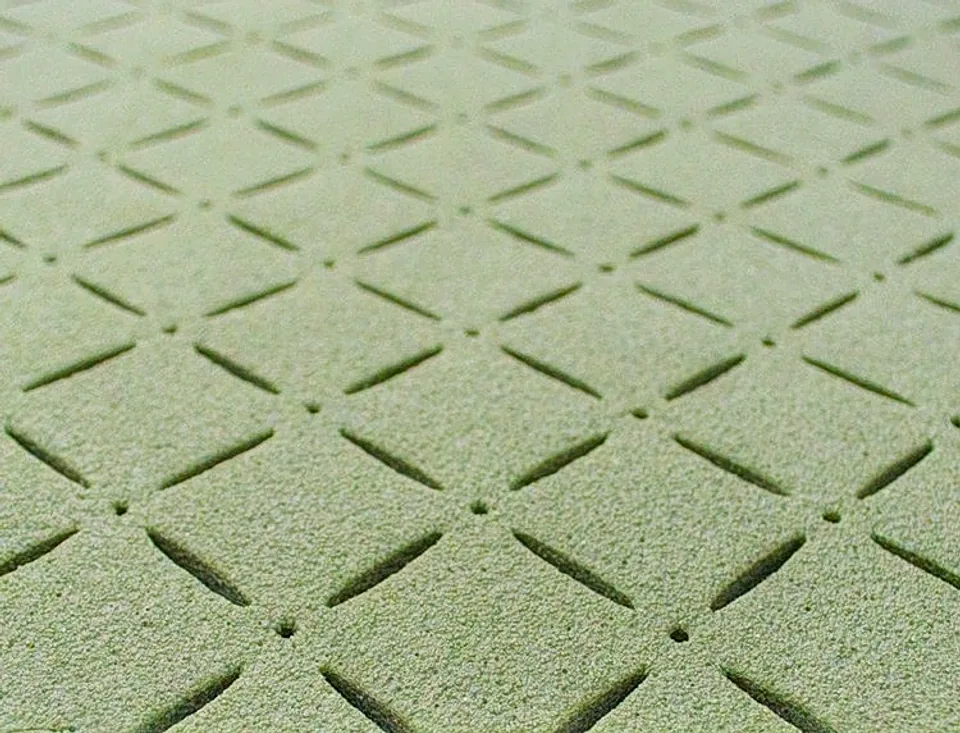
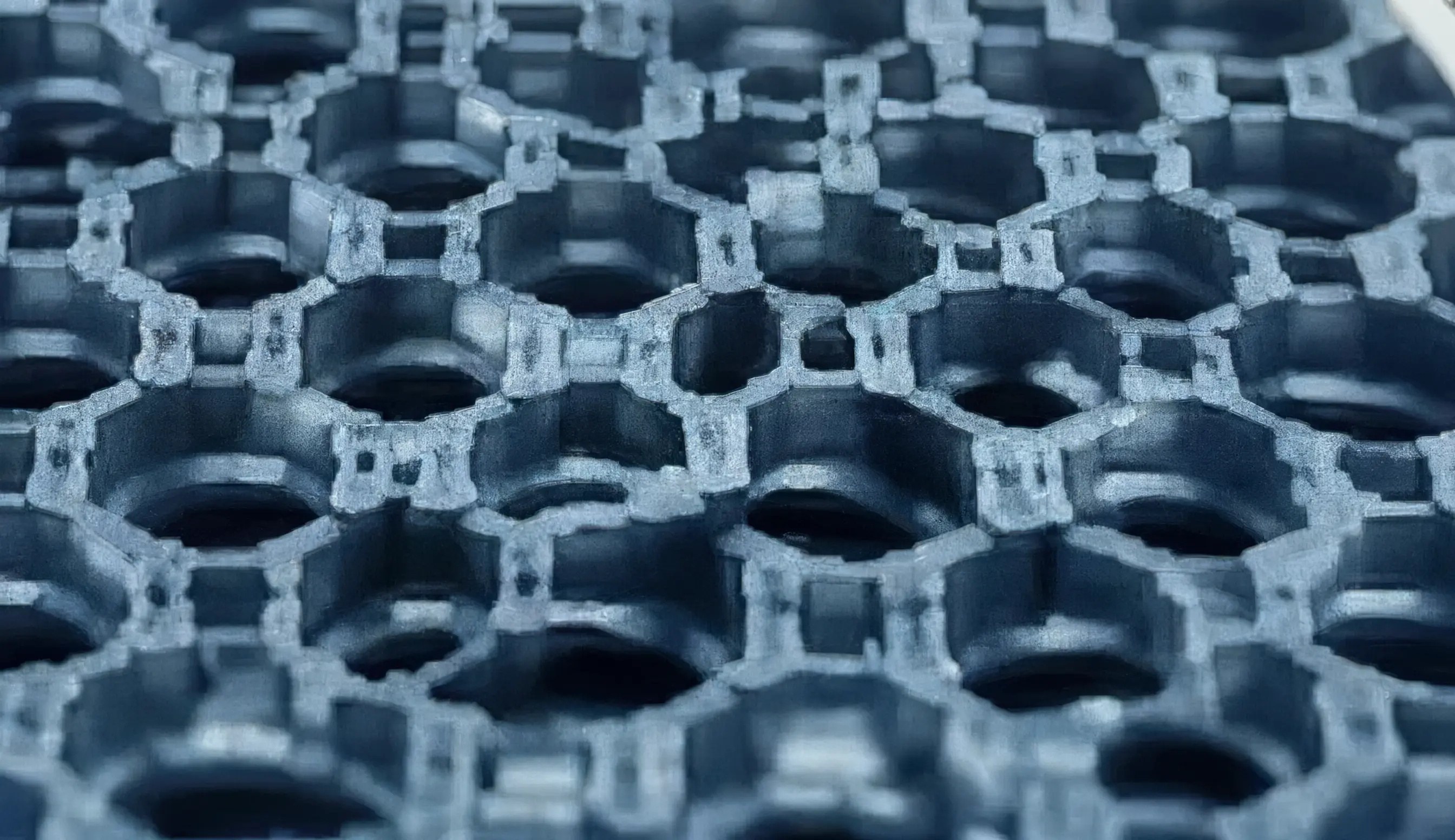
Shock pad
A prefabricated closed-cell or perforated pad laid between the base and the turf. It carries the shock absorption so the turf does not have to rely on infill depth.
Where it goes
- Non-infill turf systems
- Rooftop and podium decks
- Hockey
- Full-size football pitches
Numbers
- Format
- Rolls or interlocking panels
- Drainage
- Perforated, free draining
- Install
- Fast, often one pitch in a day
- Effect
- Lets 30 mm turf perform without infill
- Life
- Outlasts the turf above it, reusable on replacement
What to watch On a terrace the shockpad is what makes non-infill turf viable at all. It is the difference between a system the slab can carry and one it cannot.
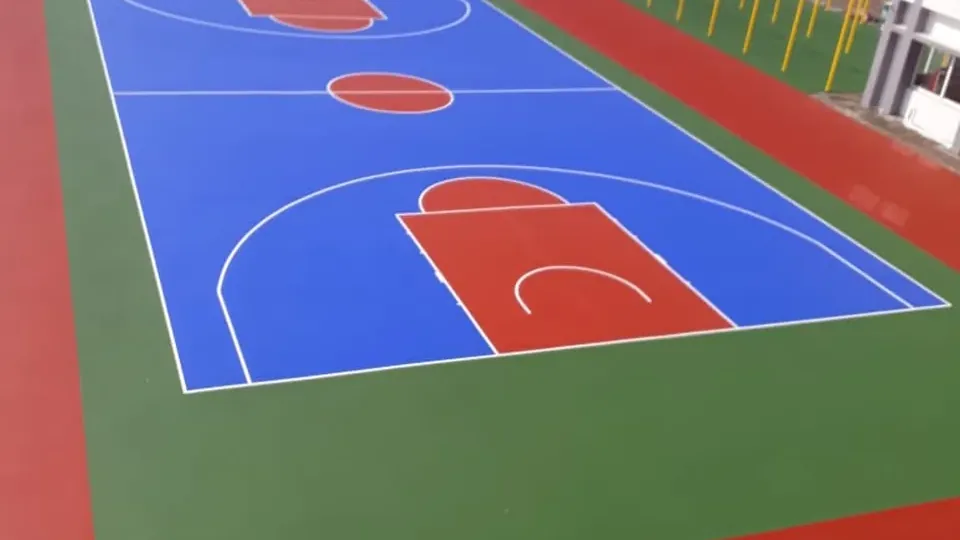
09 / Multi-layer system
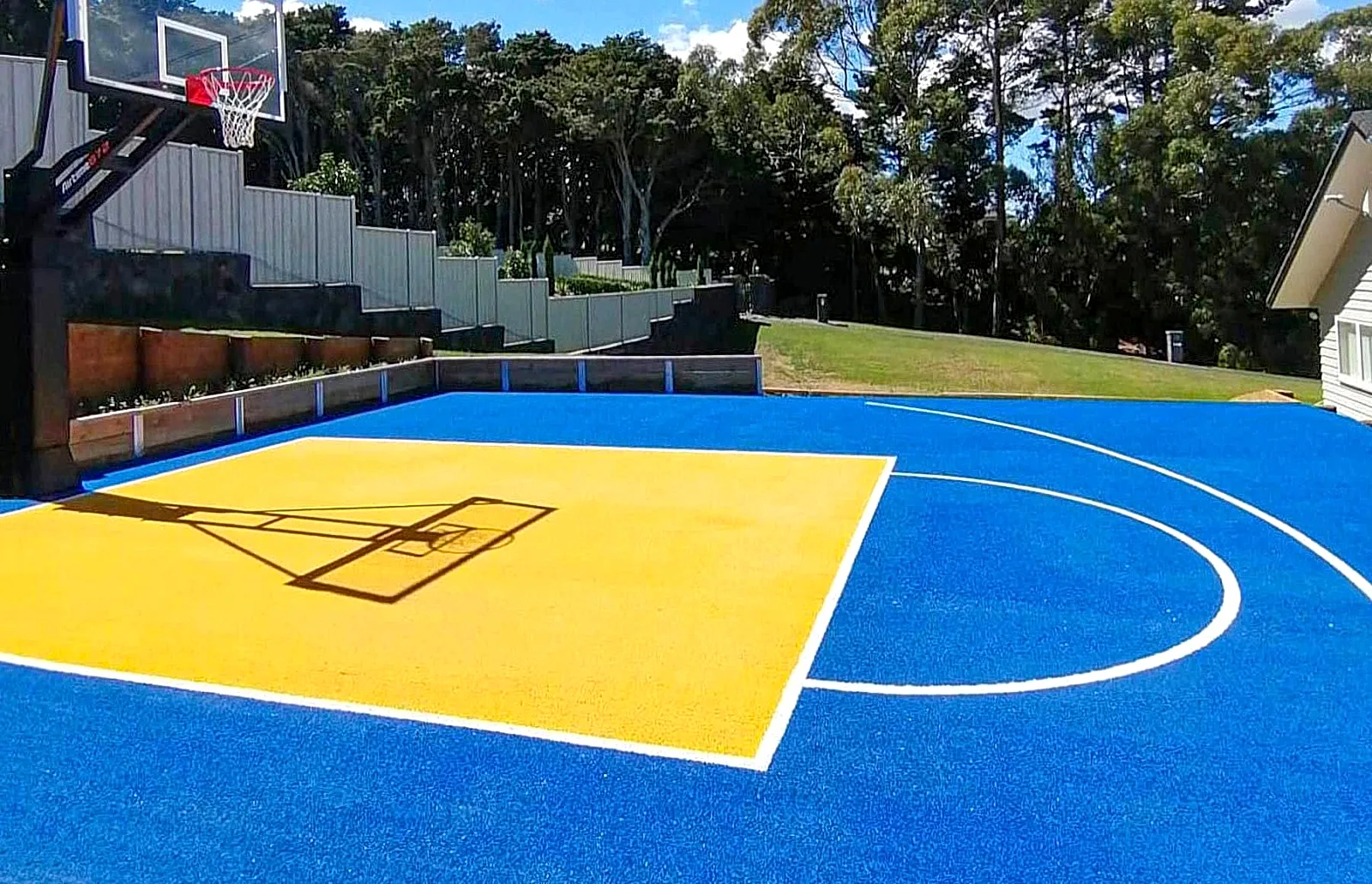
Synthetic acrylic flooring
A multi-layer sports flooring system built from acrylic resins, fillers and colour coatings, applied over a prepared asphalt or concrete base. Each layer has its own job - preparing the base, building texture and carrying the final playing colour.
Where it goes
- Tennis courts
- Basketball courts
- Multi-sport courts
- Pickleball and practice courts
Numbers
- UV
- Resistant - colour stable in full sun
- Slip
- Resistant - textured top coat
- Weather
- Resistant - sun, rain and heat cycles
- Maintenance
- Low - wash and recoat, no demolition
- Colour
- Retention built into the top coats
What to watch The system is the layers, and the layers are only as good as the base prep. An installer who rushes the first coat condemns every coat above it - the playing surface will show it inside a season.
Next