Courts, play areas & fitness floors

Courts & Sports Flooring

Acrylic and polyurethane courts, cast-in-situ rubber play surfaces, cushioned jogging loops, gym floors and modular tiles. Point-elastic systems built to the sport and the footfall.

The principle

A surface is a shock
absorber with lines on it

Every system here does the same two jobs. Return enough energy for the sport to play properly. Absorb enough of the rest so the person playing can do it again tomorrow. They differ on how much of each, how long they hold colour, and what they cost per square foot over ten years.

A school badminton hall does not need a competition PU spec. A members' club tennis court should not be getting five-layer acrylic. We will say which one your brief actually needs.

The range

Nine flooring systems

Acrylic and polyurethane systems for tennis, basketball, volleyball, badminton and pickleball.

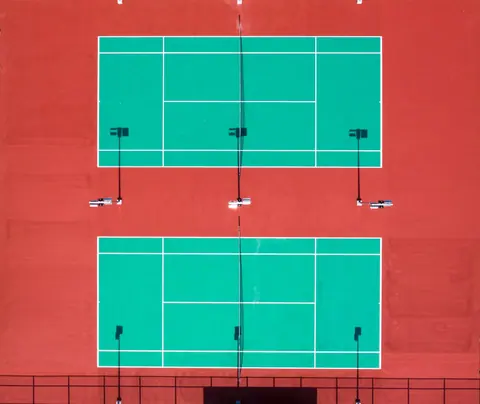
Two tennis courts seen from above with red surround and green playing area

Acrylic Court, 8 Layer Cushioned

Tennis, basketball, volleyball, pickleball, badminton

Crack filler, primer, resurfacer, three cushion coats, seal coat, then two pigmented wear coats with game lines. Kinder on knees than a plain hard court.

Build-up
Primer, resurfacer, 3 x cushion, seal, 2 x colour
Cushion
Rubberised acrylic redi-mix
Top coat
Coat 1 pigment plus silica, coat 2 pigment only
Sub-base
Concrete or bituminous
Marking
Sport-specific white or contrast lines
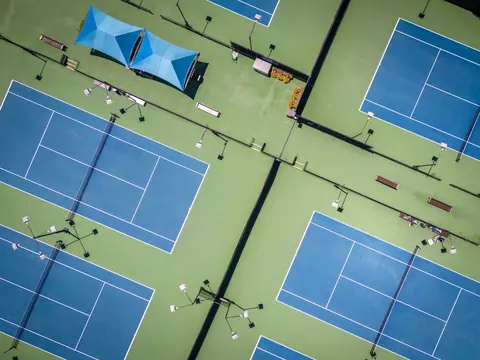
Aerial view of a grid of acrylic tennis courts

Acrylic Court, 5 Layer

Tennis, basketball, badminton, general play

Non-cushioned acrylic on a sound sub-base. The value option for schools, societies and practice courts, and the standard spec for recoating a faded court.

Build-up
Crack filler, primer, 2 x resurfacer, 2 x colour
Top coat
Coat 1 pigment plus silica, coat 2 pigment only
Sub-base
Concrete or bituminous, cured
Slope
1:100 minimum for drainage
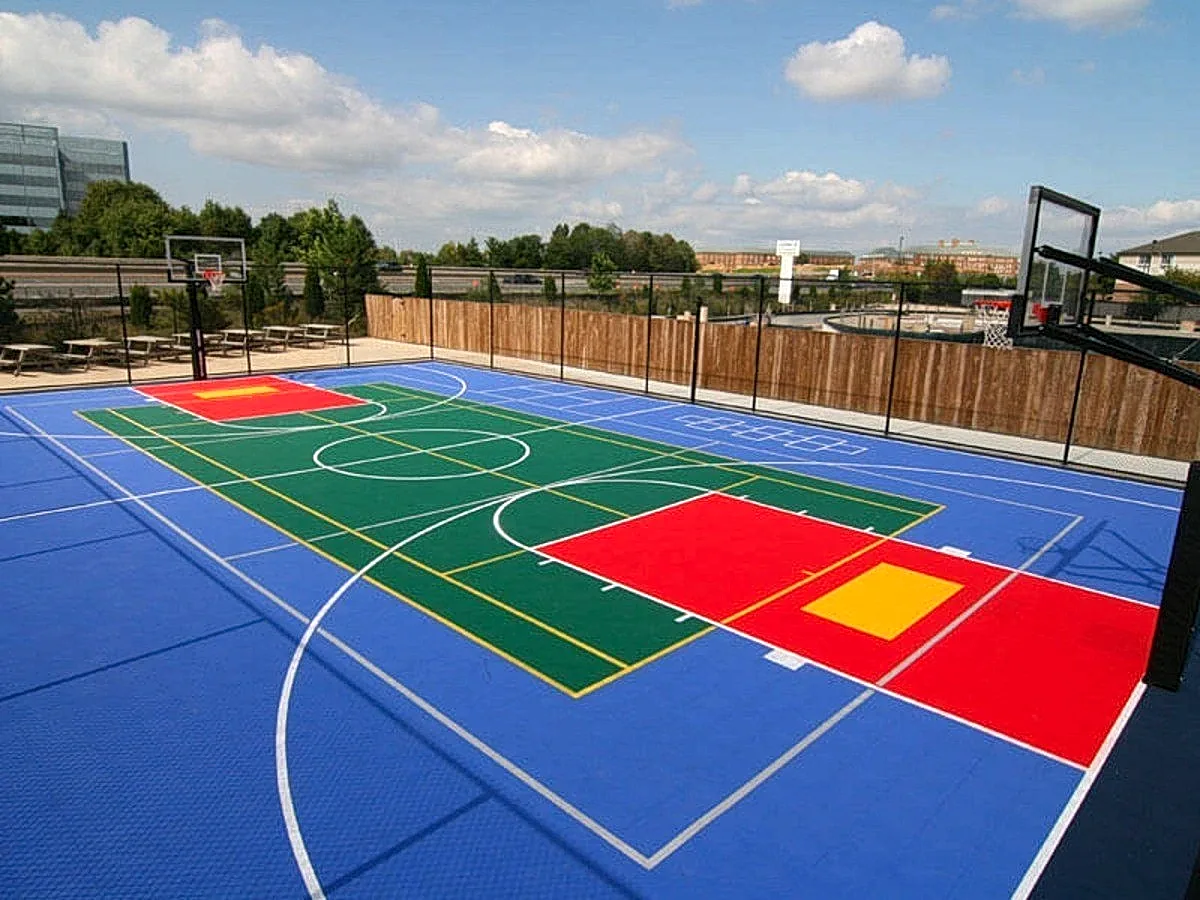
Outdoor polyurethane multi-sport court surface

PU Multi-Sport Outdoor, 8 + 2

Outdoor tennis, basketball, volleyball, badminton

Point-elastic polyurethane over 8 mm of bonded SBR granulate. Jointless, spike resistant, colour-fast for years in direct sun.

Base layer
8 mm SBR granules with PU adhesive
Build-up
Pore filler, 1 mm self-levelling PU, 2 x PU wear coat
Total
About 10 mm
Finish
Textured court coat for tennis, smooth 145 for indoor sports
Colour life
8 to 10 years typical
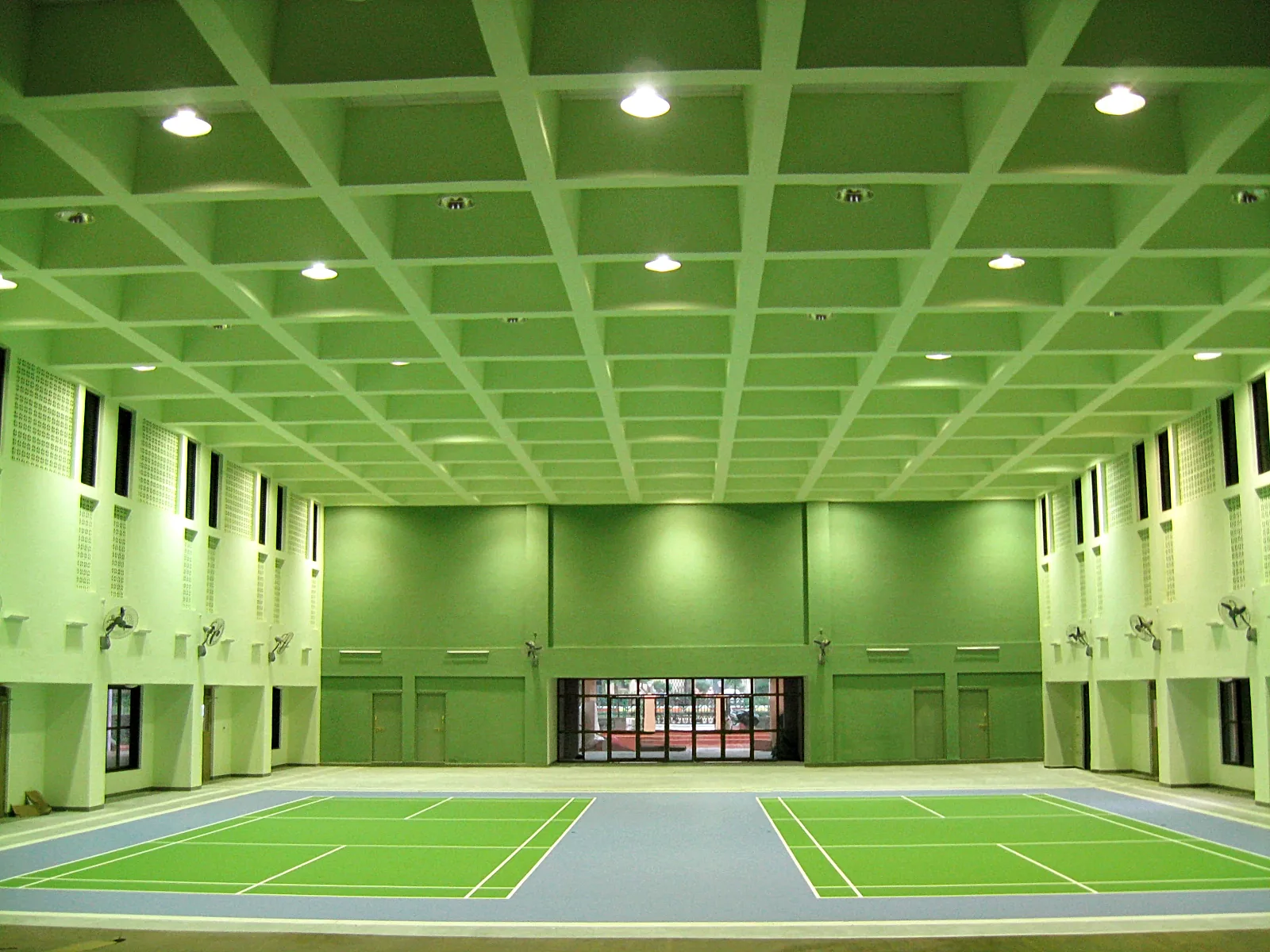
Indoor polyurethane multi-sport court in a sports hall

PU Multi-Sport Indoor, 7 + 2

Badminton halls, gymnasiums, yoga, assembly halls

Cushioned jointless PU on a 7 mm bonded rubber mat. Quiet underfoot, easy to mop, comfortable through a full day of badminton, aerobics or assembly.

Base layer
7 mm PU-bonded SBR rubber mat
Build-up
Pore filler, 2 mm self-levelling PU, PU wear coat
Total
About 9 mm
Character
Point elastic, jointless, non-porous
Colour life
8 to 10 years typical
Spray-applied polyurethane coating on a court surface

Spray-Applied PU, 2 mm

Refurbishment, multi-sport, box cricket

A structural spray coat with bonded rubber granules over a primed base. The fastest way to bring a tired concrete court back into play.

Build-up
Binder and pore sealer primer, 2 mm spray coat, lines
Character
Textured, spike resistant
Best on
Sound existing concrete or bitumen
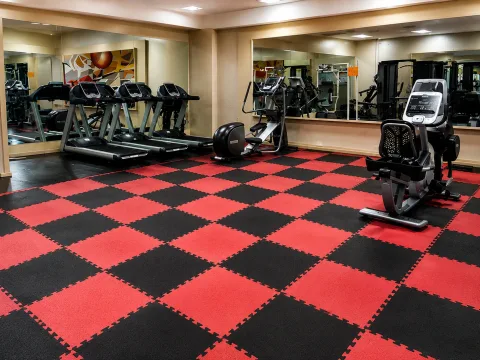
Modular interlocking sports tiles

Modular PP Interlocking Tiles

Multi-sport courts, terraces, pop-up courts

Suspended polypropylene tiles that clip together over any level hard base. Dry-laid, playable the same day, liftable if the space changes use.

Tile
304.8 x 304.8 x 15.8 mm
Material
Modified polypropylene, 100% recyclable
Weight
About 290 g per tile
Ball rebound
93%
Shock absorption
21%
Rolling load
1500 N
Service range
-40 °C to 70 °C

FAQ

Courts and flooring, answered

Polyurethane is the better surface and the higher cost. It is jointless, point-elastic, spike resistant and holds colour for eight to ten years. Acrylic is a coating system over concrete or bitumen, cheaper to lay and cheaper to recoat, and good enough for schools, societies and practice courts. Cushioned acrylic sits between the two.

A cushioned acrylic court adds rubberised cushion coats between the resurfacer and the colour coats, typically three, making an eight-layer build instead of five. The result is noticeably softer underfoot than a plain hard court, which matters for tennis and basketball players putting in long sessions.

Thickness follows the critical fall height of the tallest equipment. As a rule of thumb, 25 to 30 mm suits low equipment, 36 mm is the common school and society specification, and 50 mm goes under taller structures and around water play. We size it against your equipment schedule.

EPDM is virgin rubber made with additives for colour stability and UV resistance, so it holds colour for years and comes in a full colour range. SBR is recycled tyre crumb. It cushions just as well and costs less, but is limited to red, green and black and fades sooner. Most builds use an SBR base with an EPDM wear layer.

General fitness floors need 10 to 15 mm. Free-weight and CrossFit areas where loaded bars get dropped should be 20 to 25 mm, and platform zones thicker again. Thickness protects the slab and controls impact noise, which is usually the deciding factor in residential and commercial buildings.

Chat with us