
Maintenance
The Post-Monsoon Inspection Checklist Most Facilities Skip
A post-monsoon sports surface inspection checklist for facility owners: check drainage outlets, turf infill levels, sub-base dips and seam lifting in September, before small problems turn into expensive repairs.
September is the right time for a post-monsoon sports surface inspection. Here’s what facility owners should check before small issues become expensive repairs.
The monsoon can put sports surfaces through months of moisture, heavy rainfall, water accumulation, and repeated use. Once the rains begin to ease, many facility owners simply clean the surface and get back to regular operations.
But this is exactly when an important maintenance step is often missed: the post-monsoon inspection.
September provides a valuable window to identify problems caused or exposed by the monsoon - before they develop into major surface damage.
Whether you manage an artificial turf field, running track, sports court or multi-purpose facility, a detailed inspection can help extend the life of your sports infrastructure and prevent unnecessary repair costs.
Why Is a Post-Monsoon Sports Surface Inspection Important?
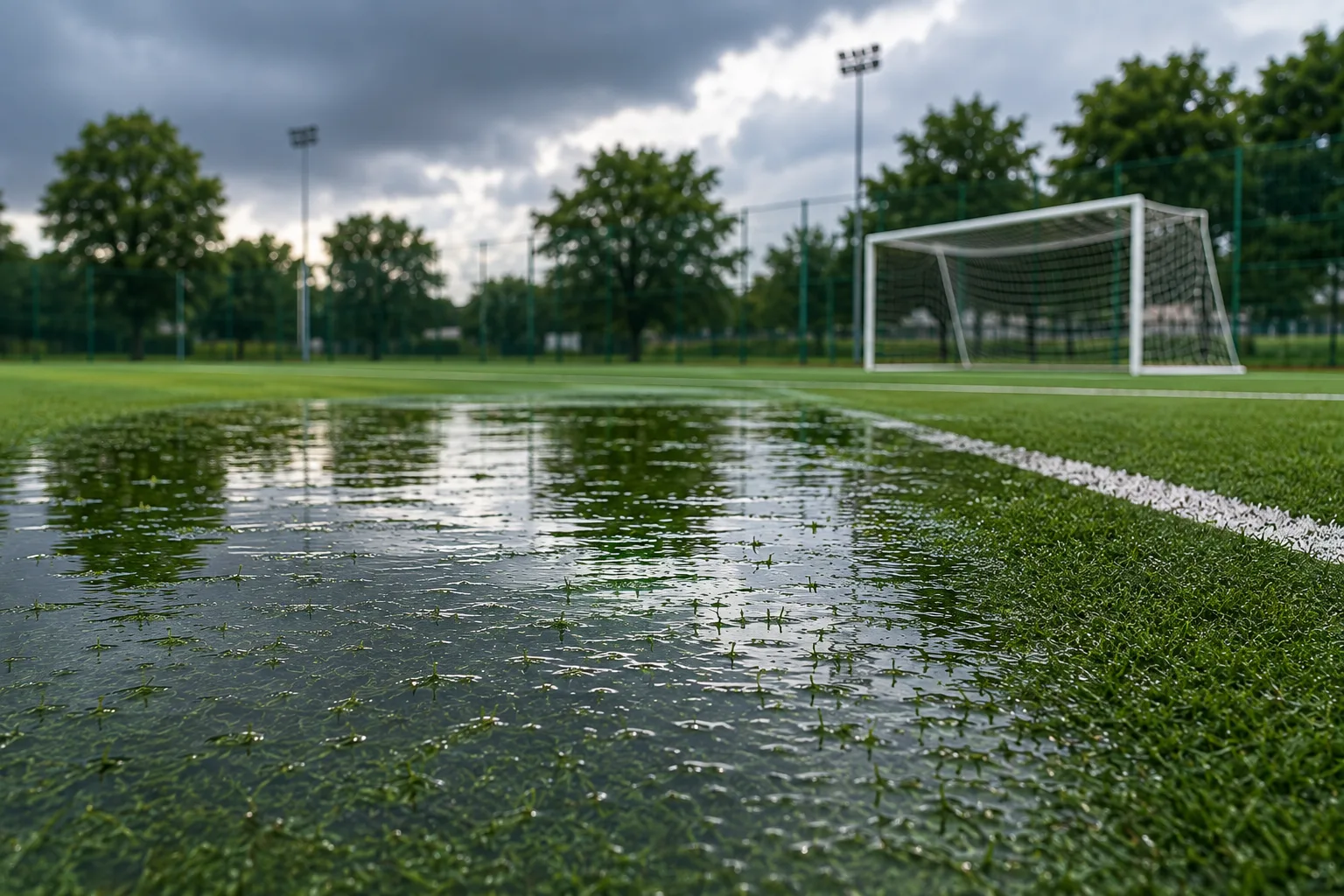
Water does not always cause immediate, visible damage.
It can collect beneath turf, affect infill levels, expose drainage problems, weaken sections of the sub-base or create movement around seams and joints.
Some of these issues may remain difficult to identify during continuous rainfall. Once the surface begins to dry, however, irregularities become much easier to spot.
A post-monsoon inspection helps answer an important question:
Is your sports surface ready for the months ahead?
Here are four areas every facility should check.
1. Check Drainage Outlets
Start with the drainage system.
Inspect drainage outlets, channels, grates and surrounding areas for:
- Blockages caused by leaves, mud or debris
- Slow water discharge
- Standing water
- Sediment accumulation
- Signs of water overflowing onto the playing surface
Poor drainage can result in prolonged moisture exposure and affect both the playing surface and the layers underneath it.
What to look for:
If water remains on the surface longer than expected after rainfall, it may indicate a drainage or grading issue that needs professional attention.
2. Inspect Turf Infill Levels
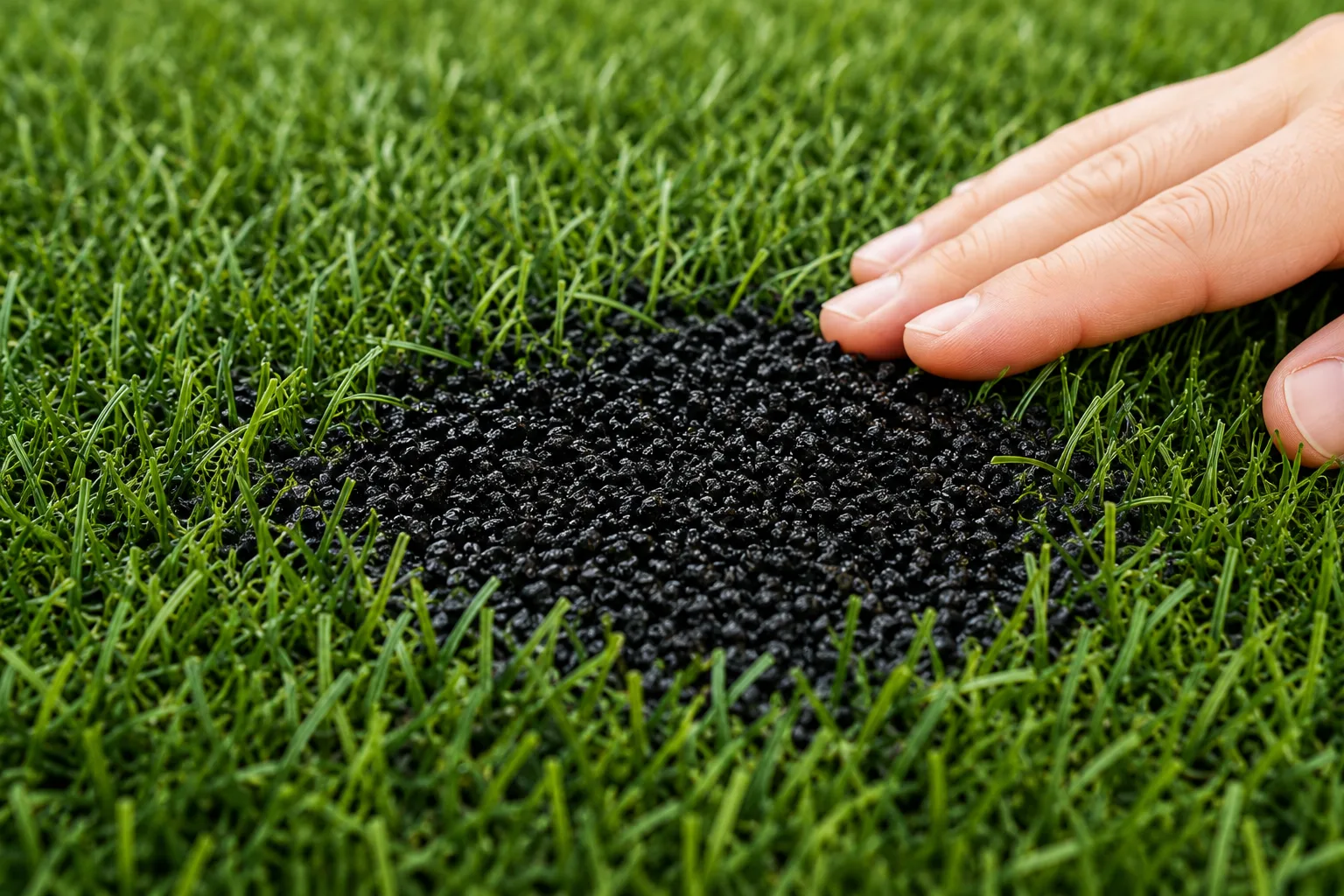
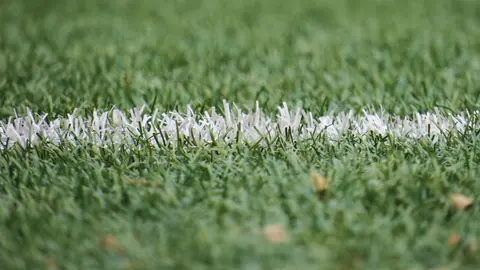
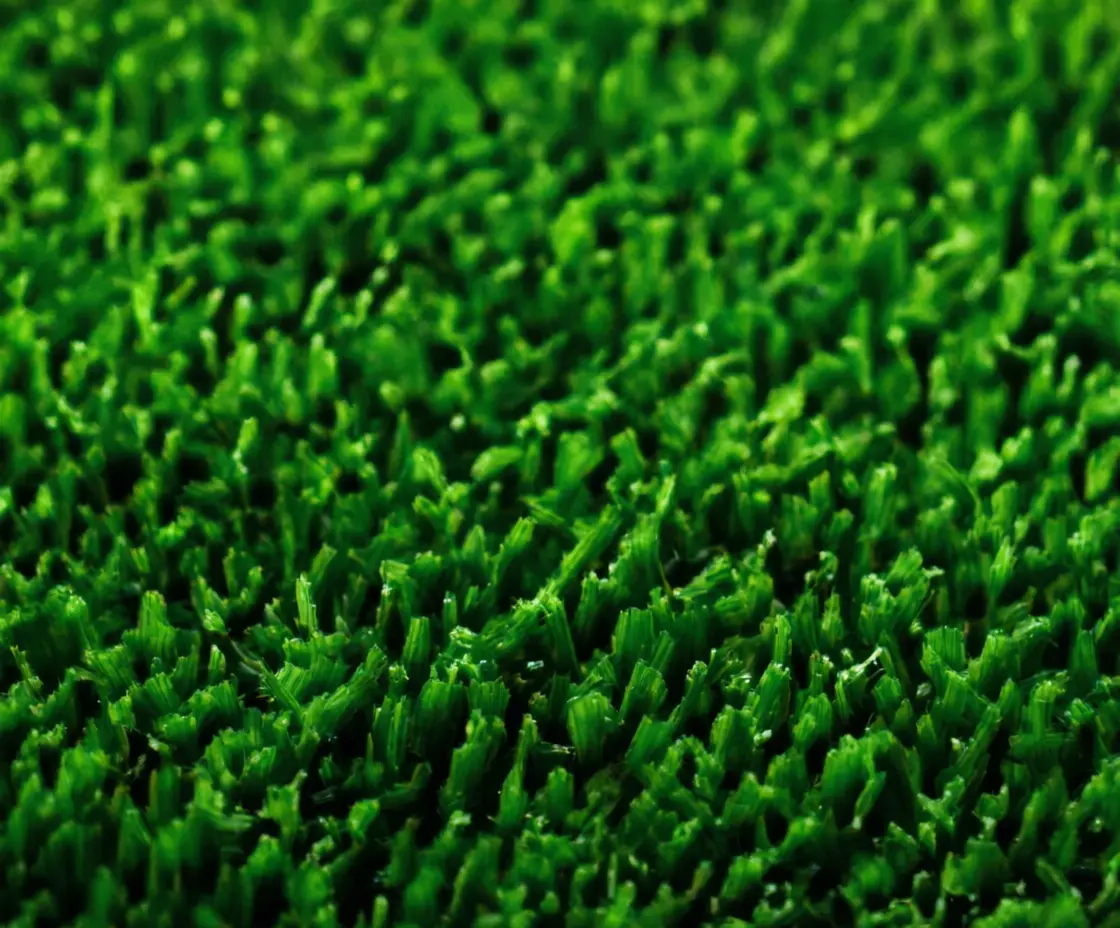
For artificial turf fields, check whether the infill remains evenly distributed across the surface.
Heavy rain and repeated activity can cause infill to move from one area to another, particularly around high-use zones.
Look for:
- Uneven infill distribution
- Areas where turf fibres appear excessively exposed
- Low-infill patches
- Compacted sections
- Differences between high-traffic and low-traffic areas
Uneven infill can affect the consistency of the playing surface and may contribute to premature turf wear.
What to look for:
Pay particular attention to goal areas, penalty spots, sidelines and other high-traffic zones.
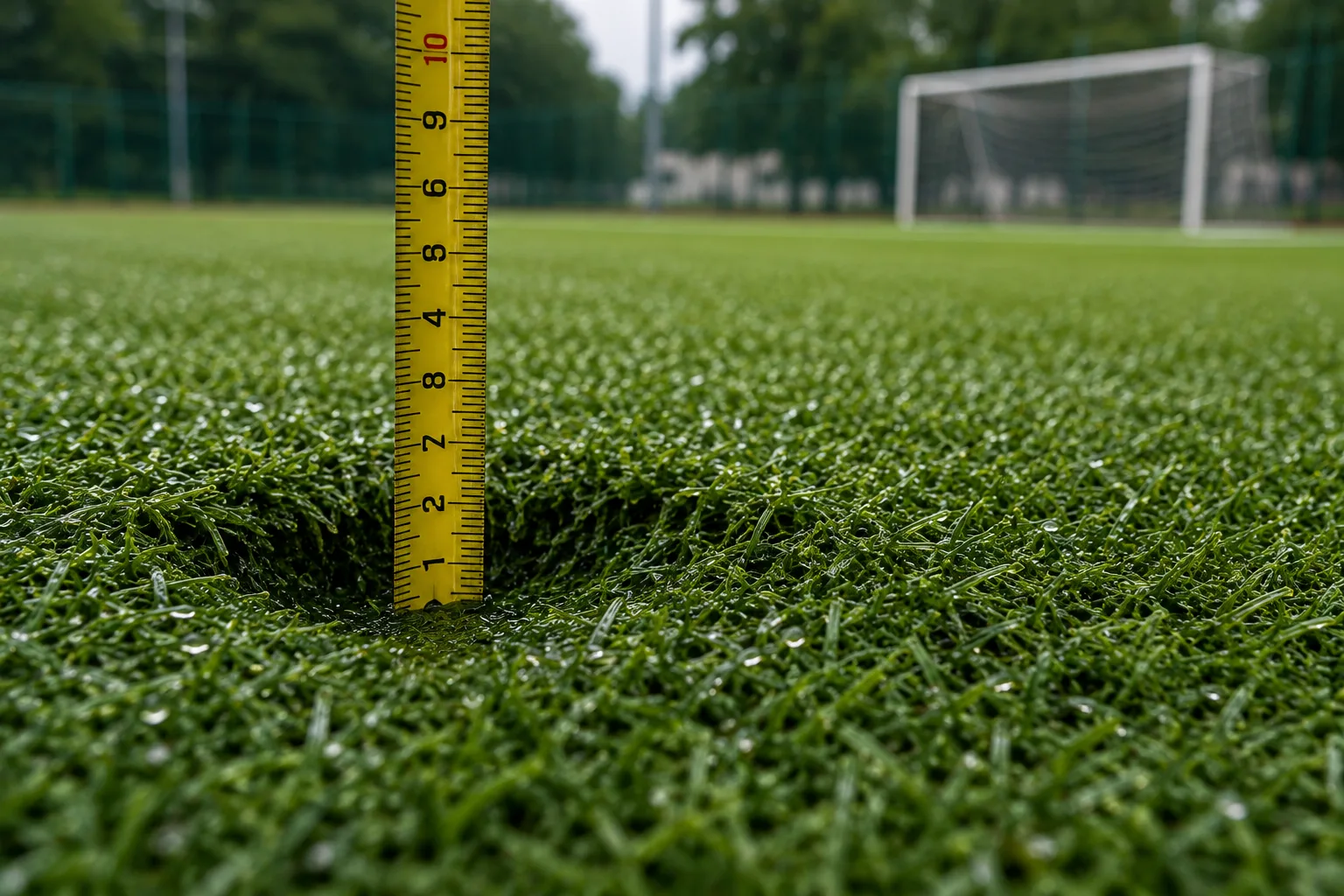
3. Look for Dips and Uneven Areas in the Sub-Base
One of the most important checks is also one of the easiest to overlook.
After prolonged rainfall, inspect the playing surface for:
- Small depressions
- Uneven areas
- Soft spots
- Water-collecting zones
- Changes in surface levels
These may indicate movement or settlement within the sub-base.
A small dip might not appear serious initially. But repeated water accumulation and regular sports activity can gradually make the problem worse.
Early identification is key.
Addressing a localized issue early can be significantly more manageable than waiting until a larger section of the surface requires corrective work.
4. Check for Seam Lifting and Surface Separation
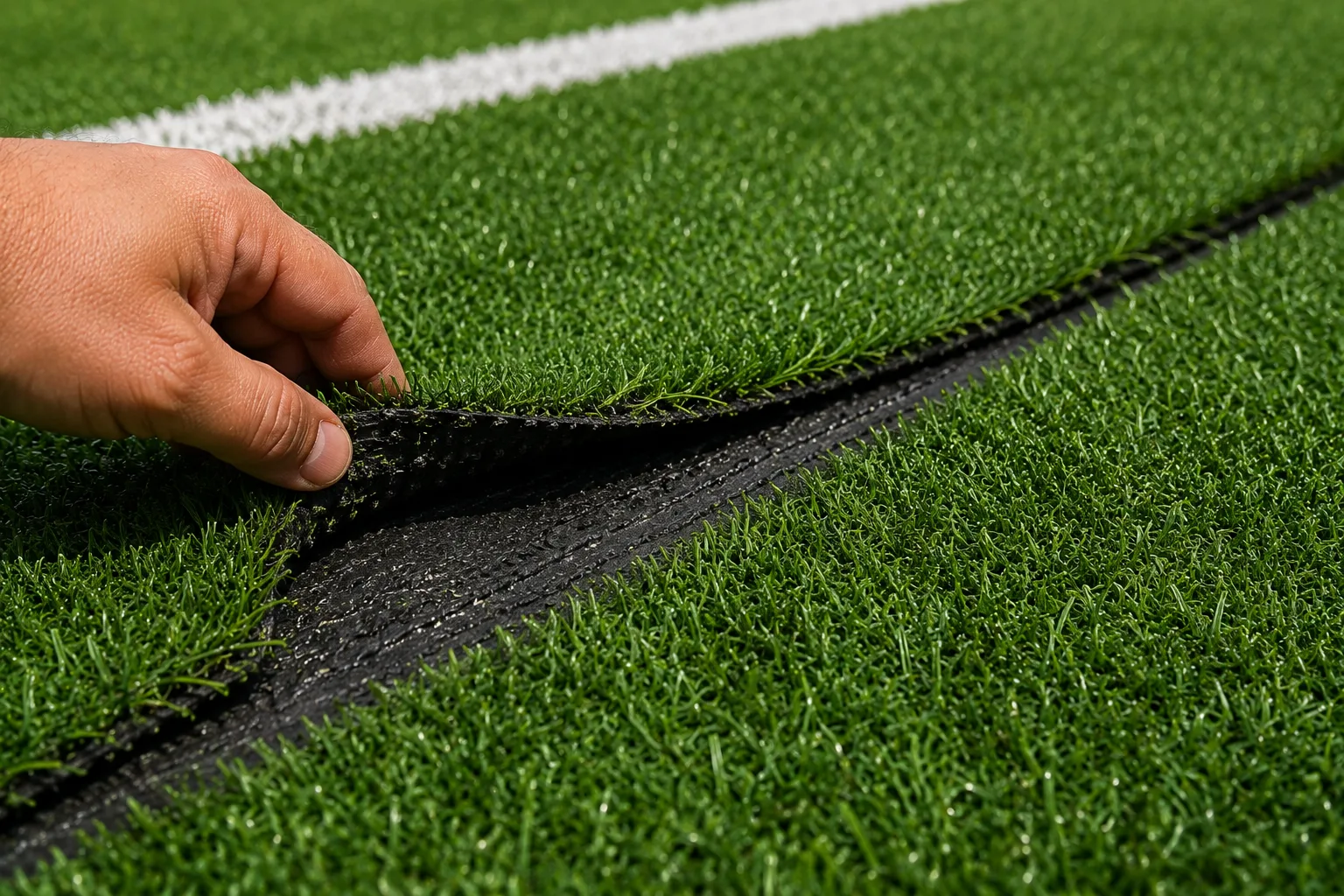
Inspect seams, joins and edges carefully.
Look for:
- Lifted seams
- Open joints
- Loose edges
- Surface separation
- Wrinkling or movement
- Damaged transition areas
These problems can become safety concerns if left unattended, particularly in high-use sports facilities.
A visual inspection should therefore include both the centre of the playing area and the perimeter.
The September Advantage
Why focus on September?
Because the post-monsoon period provides an opportunity to identify issues while they are still relatively manageable.
By this point, the effects of repeated rainfall may be visible, but there is still time to plan maintenance before problems become more extensive.
Instead of waiting for users to report uneven surfaces, drainage issues or turf problems, facility managers can take a proactive approach.
Inspect. Identify. Maintain. Protect.
That simple cycle can help reduce unexpected downtime and support the long-term performance of your sports facility.
A Simple Post-Monsoon Checklist
Before putting your facility back into full post-monsoon operation, check:
- Drainage outlets are clear
- No prolonged standing water is visible
- Turf infill is evenly distributed
- High-traffic areas have been inspected
- No visible dips or soft spots are present
- Sub-base levels appear consistent
- Turf seams are secure
- Edges and transitions are intact
- Surface damage has been documented
- Any required maintenance has been planned
Don't Wait for a Small Problem to Become a Major Repair
Sports surfaces are designed to handle demanding use, but regular inspection and maintenance are essential for maintaining their performance over time.
A post-monsoon inspection is not simply about finding visible damage. It is about identifying early warning signs and taking action before they develop into expensive problems.
At AD Sports Infra, sports infrastructure is about more than installation. The right surface also needs the right care, inspection and maintenance approach throughout its service life.
This September, don't just clean your sports surface. Inspect it.
Need your sports surface inspected?
Talk to AD Sports Infra for professional guidance on sports flooring, artificial turf, and sports surface maintenance.
Questions about your surface?
Send the location and a photo of what is there today. We will tell you what it needs.
Request a quote +91 98197 45820